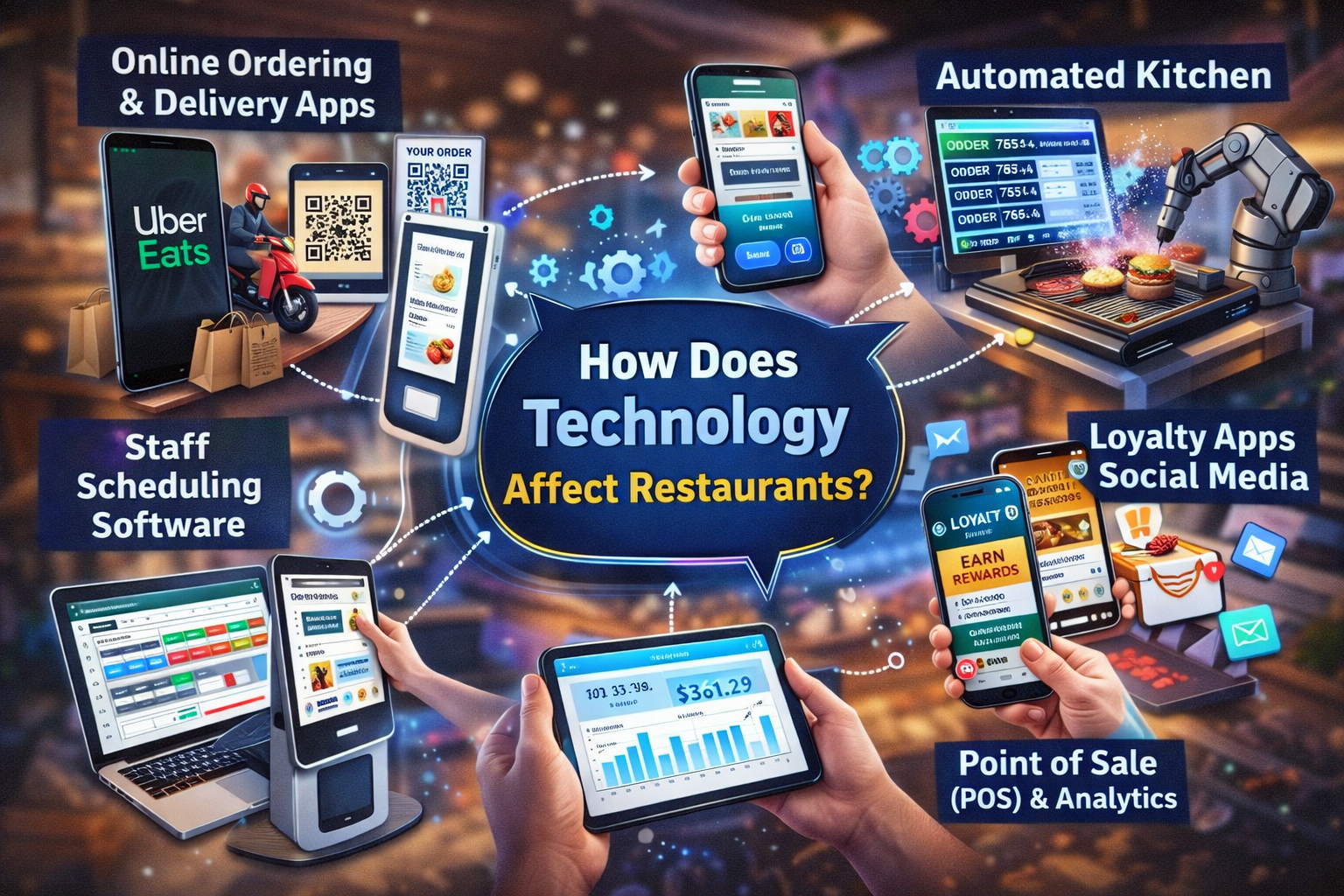

The aroma of freshly cooked food, the clinking of glasses, and the murmur of satisfied patrons – these are the hallmarks of a great restaurant experience. Yet, beneath this timeless facade, a silent revolution is underway, fundamentally changing how technology affects restaurants. In 2026, technology is no longer just a tool but an embedded partner, reshaping everything from kitchen operations to customer interactions. From the moment a customer considers dining out to the final payment, digital innovations are at play, promising efficiency, enhanced experiences, and new growth opportunities.
This article will explore the multifaceted impact of technological advancements on the restaurant industry. We’ll examine how restaurants are leveraging cutting-edge solutions to streamline operations, personalize customer journeys, and navigate the competitive landscape of 2026. Understanding these shifts is crucial for any restaurateur aiming to thrive in the modern era.
Key Takeaways
- Operational Efficiency: Technology significantly automates and optimizes back-of-house tasks, from inventory management to kitchen display systems (KDS), reducing waste and improving speed.
- Enhanced Customer Experience: Digital ordering, personalized recommendations, and seamless payment options redefine customer convenience and satisfaction.
- Data-Driven Decisions: Analytics tools provide invaluable insights into customer preferences, peak hours, and menu performance, enabling smarter business strategies.
- Marketing and Reach: Social media, online review platforms, and sophisticated CRM systems extend a restaurant’s reach, attracting new diners and fostering loyalty.
- Future Trends: AI and robotics are poised to further transform the industry, promising even greater automation and personalized services in the coming years.
The Digital Transformation of Restaurant Operations
The core of any successful restaurant lies in its operations. For a long time, these processes were manual and often prone to human error. However, as of 2026, technology has profoundly reshaped the operational backbone of restaurants, leading to significant improvements in efficiency and cost control.
Streamlining Back-of-House with Smart Solutions
The kitchen, traditionally a bustling and sometimes chaotic environment, is becoming increasingly organized and efficient thanks to technological integration.
Inventory Management Systems
Gone are the days of manual stock-taking with clipboards and pens. Modern inventory management systems utilize sensors, AI, and integrated POS data to track ingredients in real-time. This not only prevents food waste by identifying expiring items but also automates reordering processes, ensuring that kitchens are always stocked without over-purchasing. This precise control over ingredients directly impacts profitability and reduces environmental impact.
Kitchen Display Systems (KDS)
Paper tickets are rapidly being replaced by Kitchen Display Systems (KDS). These digital screens display orders from various sources – dine-in, takeout, delivery apps – to kitchen staff. KDS systems organize orders, prioritize them based on prep time, and allow for easy communication between different stations. This minimizes errors, speeds up food preparation, and ensures consistency in dish delivery, directly influencing how technology affects restaurants by improving speed and accuracy.
Predictive Analytics for Resource Allocation
Sophisticated software can now analyze historical sales data, weather patterns, local events, and even social media trends to predict demand. This allows restaurants to optimize staffing levels, prep quantities, and ingredient purchases with greater accuracy. Such predictive capabilities reduce labor costs during slow periods and prevent lost sales during busy times. Businesses looking to leverage AI for such optimizations can find valuable insights on how AI can optimize business processes for maximum efficiency.
Enhancing Front-of-House Efficiency
Technology’s impact isn’t limited to the kitchen; it’s also dramatically improving the customer-facing aspects of restaurant operations.
Point-of-Sale (POS) Systems
Modern POS systems are far more than just cash registers. In 2026, they are integrated hubs managing orders, payments, loyalty programs, inventory, and even employee timekeeping. Cloud-based POS systems allow restaurateurs to monitor sales and operations remotely, providing unprecedented control and insight.
Online Ordering and Delivery Platforms
The rise of online ordering and third-party delivery services has fundamentally altered the restaurant landscape. Customers expect the convenience of ordering from their phones and having food delivered to their doorsteps. While these platforms come with their own challenges (commission fees, logistics), they undeniably expand a restaurant’s reach and revenue streams. Many restaurants are also developing their own branded apps to retain more control and customer data.
Reservation and Table Management Software
Digital reservation systems have become standard, allowing customers to book tables online at their convenience. These systems often integrate with table management tools, helping hosts optimize seating arrangements, manage waitlists, and track table turnover times. This reduces customer waiting times and maximizes seating capacity.
Redefining the Customer Experience with Technology
The modern diner expects more than just good food; they expect a seamless, personalized, and engaging experience. This is another area where how technology affects restaurants is profoundly evident.
Personalized Interactions and Loyalty Programs
Technology enables restaurants to gather data on customer preferences, ordering history, and dietary restrictions. This data can be used to offer personalized recommendations, promotions, and a more tailored dining experience.
Customer Relationship Management (CRM) Systems
Advanced CRM systems allow restaurants to build detailed customer profiles. This means knowing a customer’s favorite dish, their typical order size, or their preferred dining time. This information can then be used to send targeted marketing messages, offer exclusive discounts, and acknowledge special occasions, fostering stronger customer loyalty. To understand the broader impact of AI on business, including CRM, explore the future impact of AI on business.
Digital Loyalty Programs
Traditional punch cards have largely been replaced by digital loyalty programs. These programs often integrate with POS systems, automatically tracking customer purchases and rewarding them with points, discounts, or exclusive offers. This encourages repeat business and provides valuable data on customer spending habits.
Enhanced Ordering and Payment Convenience
The process of ordering and paying has become significantly more convenient and diverse.
Self-Ordering Kiosks and Tabletop Tablets
Fast-casual restaurants and even some full-service establishments are deploying self-ordering kiosks, empowering customers to browse menus, customize orders, and pay without waiting for staff. Similarly, tabletop tablets allow diners to view menus, place orders, and even play games while waiting for their food, improving efficiency and customer autonomy.
Mobile Payment Options
From contactless credit cards to mobile payment apps like Apple Pay and Google Pay, customers expect a variety of secure and speedy payment options. QR code payments are also gaining traction, allowing diners to scan a code at their table to view the bill, split it, and pay directly from their phone, bypassing the need for a server to process the transaction.
Immersive Digital Menus
Interactive digital menus, often displayed on tablets or large screens, can feature high-quality photos, video clips of dishes, allergen information, and even pairing suggestions. Some utilize augmented reality (AR) to show what a dish will look like on the table before ordering, enhancing anticipation and reducing order anxiety.
The Role of Data and Analytics in Restaurant Strategy
In 2026, data is the new ingredient for success. Understanding how technology affects restaurants means recognizing the power of data analytics to drive strategic decisions.
Gaining Insights from Sales Data
Every transaction, every order, every customer interaction generates valuable data. Restaurants are now equipped with tools to collect, analyze, and interpret this information to make informed decisions.
Menu Engineering
By analyzing sales data, restaurants can identify their most profitable dishes, their most popular items, and those that are underperforming. This allows for strategic menu engineering – adjusting pricing, placement, and descriptions to maximize profit and customer satisfaction.
Peak Performance Analysis
Data analytics can pinpoint peak hours, busiest days, and seasonal trends. This insight is critical for optimizing staffing schedules, managing inventory, and planning marketing campaigns. Knowing when to expect a rush allows restaurants to prepare adequately, ensuring smooth service.
Customer Behavior Patterns
Understanding when customers order specific items, their average spend, and their preferred channels (dine-in, takeout, delivery) helps restaurants tailor their offerings and service models. For instance, if data shows a surge in healthy takeout orders on weekdays, a restaurant might expand its healthy options and promote them specifically for lunch delivery.
Feedback Mechanisms and Online Reputation Management
Technology provides powerful platforms for customers to share their experiences, and for restaurants to manage their online reputation proactively.
Online Reviews and Social Media Monitoring
Platforms like Yelp, Google Reviews, and TripAdvisor, along with social media channels, are crucial for a restaurant’s visibility and reputation. Technology allows restaurants to monitor these platforms, respond to feedback (both positive and negative) in real-time, and identify recurring issues that need addressing. Effective online reputation management can significantly impact customer acquisition and retention.
Digital Surveys and Feedback Forms
Beyond public review sites, many restaurants use digital surveys or feedback forms (often accessible via QR codes) to gather specific input on their food, service, and ambiance. This direct feedback is invaluable for continuous improvement and demonstrating a commitment to customer satisfaction.
Future Horizons: AI, Robotics, and Beyond
The impact of technology on restaurants is not static; it’s constantly evolving. Looking ahead, how technology affects restaurants will be increasingly defined by advancements in artificial intelligence and robotics. Businesses keen on understanding AI’s broad applications can refer to how AI is transforming different business sectors.
Artificial Intelligence in the Kitchen and Front-of-House
AI is moving beyond data analytics to more active roles.
AI-Powered Kitchen Automation
Robotic arms capable of performing repetitive tasks like flipping burgers, chopping vegetables, or even crafting complex barista drinks are becoming more sophisticated and affordable. These robots can work tirelessly, ensuring consistency and precision, freeing human staff for more complex and customer-centric roles. While widespread adoption is still developing, the capabilities are rapidly expanding.
AI for Predictive Customer Service
AI chatbots are already handling initial customer inquiries for reservations or menu information. In the future, AI could proactively anticipate customer needs, suggest personalized menu items based on real-time data and even manage dynamic pricing based on demand and ingredient availability. Those interested in integrating AI can find a comprehensive guide at a step-by-step guide to integrating AI into your business.
Voice Ordering
Voice-activated assistants are making their way into various aspects of daily life, and ordering food is no exception. Customers can already place orders through smart speakers or restaurant apps using voice commands, further simplifying the ordering process.
Robotics for Delivery and Service
The pandemic accelerated the adoption of delivery robots, and their presence is expected to grow.
Autonomous Delivery Vehicles
Self-driving robots are being tested and deployed for last-mile food delivery, particularly in urban areas. These robots can navigate sidewalks and roads, carrying orders directly to customers’ doors, reducing delivery costs and improving efficiency.
Robotic Servers and Bartenders
While still in experimental phases for many, robotic servers can deliver food to tables and clear dishes, especially in settings where human interaction isn’t the primary draw. Robotic bartenders can precisely mix cocktails, ensuring consistency and speed. These innovations are transforming labor allocation within the industry.
Virtual and Augmented Reality Experiences
While less common, some innovative restaurants are experimenting with VR/AR to create unique dining experiences. This could involve projecting immersive scenes onto tables or walls, transporting diners to different locales, or even allowing them to “see” the ingredients’ origin stories.
Challenges and Considerations
While the benefits of technology are immense, their implementation is not without challenges.
Initial Investment and Maintenance Costs
Adopting new technologies often requires significant upfront investment in hardware, software, and training. Maintaining these systems, including regular updates and troubleshooting, also incurs ongoing costs.
Cybersecurity Risks
With increased reliance on digital systems, restaurants become more vulnerable to cyber threats, including data breaches of customer information or payment details. Robust cybersecurity measures are essential.
The Human Touch
A core concern is maintaining the human element that makes dining out special. While technology can enhance efficiency, it should not completely replace the warmth, personal service, and ambiance that diners often seek. The goal is to augment, not erase, human interaction.
Employee Training and Adaptation
Introducing new technologies requires employees to adapt and learn new skills. Adequate training and support are crucial to ensure a smooth transition and maximize the benefits of the new systems.
Integration Complexities
Often, restaurants use multiple disparate technologies (POS, inventory, loyalty, delivery apps). Integrating these systems to work seamlessly together can be complex and require specialized expertise.
Conclusion
In 2026, technology is unequivocally a transformative force within the restaurant industry. From optimizing intricate back-of-house operations with sophisticated inventory management and KDS systems to revolutionizing the customer experience through personalized digital interactions, seamless ordering, and diverse payment options, its impact is pervasive. Data analytics empowers restaurateurs with unprecedented insights, allowing for data-driven decisions that enhance profitability and customer satisfaction. Looking forward, the burgeoning fields of AI and robotics promise even greater automation and innovation, further redefining the boundaries of what a restaurant can achieve.
Navigating this evolving landscape requires restaurateurs to be strategic and adaptable. The key is not merely to adopt technology for its own sake but to meticulously select and integrate solutions that genuinely enhance efficiency, improve the customer experience, and support the business’s unique vision. While challenges such as investment costs, cybersecurity, and maintaining the vital “human touch” persist, the opportunities presented by technological advancements far outweigh the hurdles. Restaurants that embrace this digital evolution will be well-positioned to thrive, offering diners exceptional experiences and ensuring their long-term success in a competitive market. The future of dining is undoubtedly smart, connected, and incredibly exciting.
Frequently Asked Questions
A Kitchen Display System (KDS) is a digital screen system used in restaurant kitchens to display incoming food orders. It replaces paper tickets, showing orders from various sources (dine-in, online, delivery) to kitchen staff, helping to organize, prioritize, and track meal preparation. This improves speed, accuracy, and communication within the kitchen.
AI can analyze historical sales data, supplier lead times, and even external factors like weather to predict demand for ingredients. This allows for automated, optimized ordering, minimizing waste from overstocking and preventing stockouts, ultimately saving costs and improving efficiency.
Yes, self-ordering kiosks can be very beneficial. They empower customers to customize their orders at their own pace, reduce wait times, increase order accuracy, and free up staff to focus on other customer service aspects. They can also lead to increased average check sizes through upselling prompts.
How To Optimize Your Restaurant with Technology
Identify areas in your restaurant where manual processes are inefficient or prone to error. This could be inventory, order taking, or customer feedback management.
Anyone researching affect restaurants 2026 may also want to understand hdd gaming 2026 unpacking before deciding on the best option.
Look into modern POS systems, KDS, online ordering platforms, CRM, and inventory management software that align with your needs and budget. Consider cloud-based solutions for scalability.
Create a clear plan for how new technologies will integrate with existing systems. Budget for initial setup, recurring subscriptions, and potential hardware upgrades. Prioritize solutions with good vendor support.
Roll out new technologies systematically. Crucially, provide thorough training for all staff members who will be using the new systems. Ensure they understand the benefits and how to troubleshoot common issues.
Regularly review performance data from your new systems. Gather feedback from both staff and customers. Use insights to make adjustments, further optimize processes, and explore additional technological advancements.
Key Technological Terms in Restaurants
Point-of-Sale (POS) System
A computer-based system used in restaurants to process customer orders, handle payments, manage sales, and often integrate with other operational functions like inventory and loyalty programs.
Kitchen Display System (KDS)
A digital screen system that displays food orders in the kitchen, replacing traditional paper tickets, to improve order accuracy, speed of service, and communication among kitchen staff.
Customer Relationship Management (CRM) System
Software used to manage and analyze customer interactions and data throughout the customer lifecycle, aiming to improve business relationships with customers, assist in customer retention, and drive sales growth.
Predictive Analytics
A branch of advanced analytics that uses historical data, statistical algorithms, and machine learning techniques to identify the likelihood of future outcomes based on new data. In restaurants, it can forecast demand, optimize staffing, and manage inventory.

 By
By