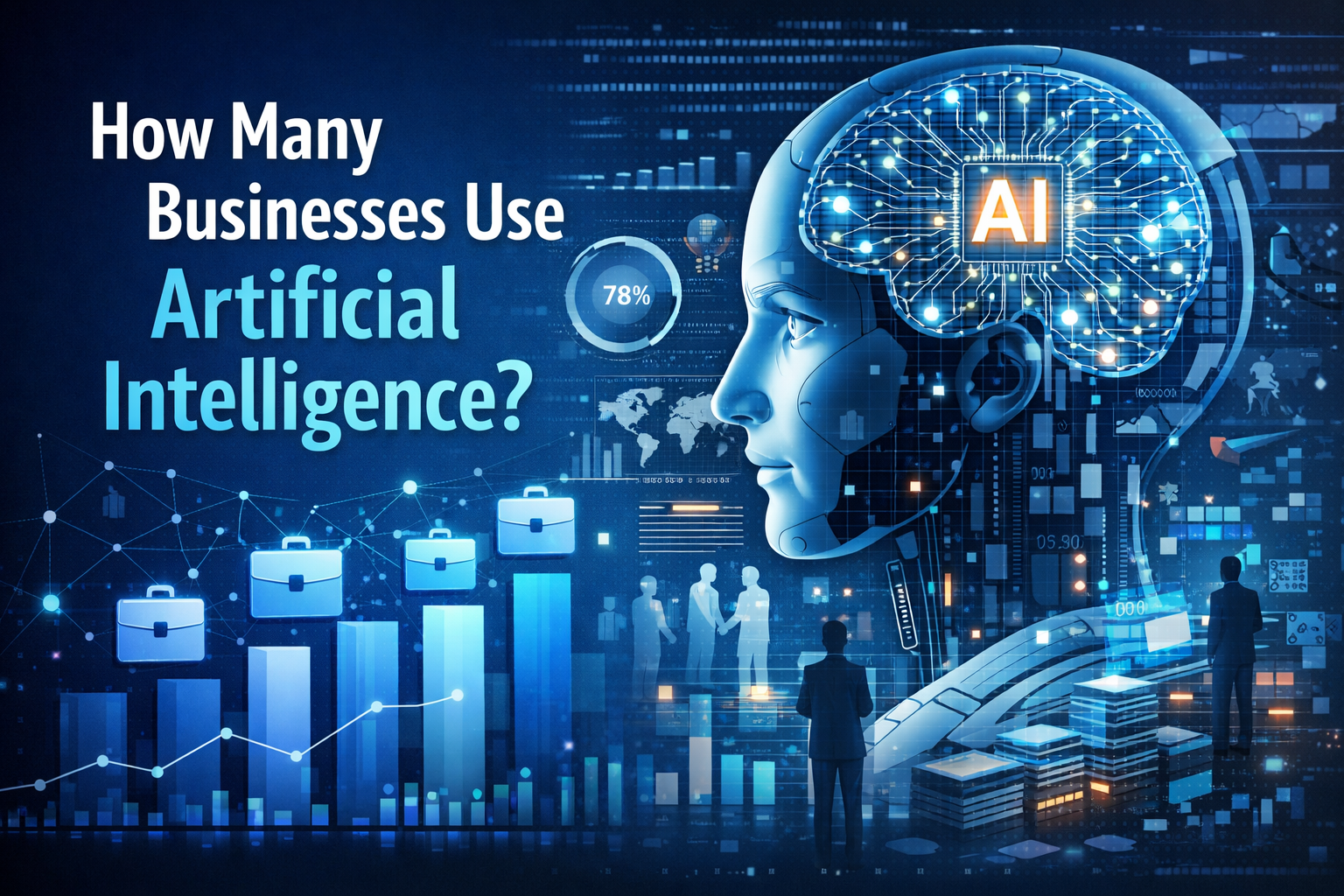

The digital landscape of 2026 is buzzing with innovation, and at its heart lies Artificial Intelligence (AI). Businesses globally are rapidly embracing AI, transforming operations, customer experiences, and strategic decision-making. But exactly how many businesses use artificial intelligence, and what does this widespread adoption signify for the future? This comprehensive article dives deep into the current state of AI integration across various industries, exploring the statistics, trends, benefits, and challenges businesses face in this exciting new era. Understanding the extent of AI’s penetration is crucial for any organization looking to remain competitive and relevant in today’s fast-evolving market.
Key Takeaways
- Widespread Adoption: A significant and growing majority of businesses, particularly large enterprises, have already integrated AI into some aspect of their operations by 2026, with SMBs rapidly catching up.
- Diverse Applications: AI is not limited to tech giants; it’s being used across various sectors for tasks like customer service, data analytics, process automation, and personalized marketing.
- Key Drivers: The main motivators for AI adoption include enhancing efficiency, improving customer experience, fostering innovation, and gaining competitive advantages.
- Challenges Remain: Despite widespread enthusiasm, businesses still grapple with challenges such as data quality, talent shortages, ethical concerns, and the complexity of integration.
- Future Growth: The trend of AI adoption is expected to accelerate, making AI proficiency a critical component of business strategy for sustained growth and innovation in the coming years.
The AI Revolution: A Global Business Phenomenon in 2026
Artificial intelligence, once a concept confined to science fiction, has firmly established itself as a cornerstone of modern business strategy. From automating mundane tasks to providing deep insights from vast datasets, AI’s capabilities are redefining what’s possible for organizations of all sizes. The question of “how many businesses use artificial intelligence” isn’t merely about numbers; it’s about understanding the seismic shift occurring in the global economy and anticipating where it’s headed next.
Defining AI Adoption in Business
When we talk about businesses using AI, we’re referring to a broad spectrum of applications. This can range from implementing off-the-shelf AI tools for specific functions, like chatbots for customer support or predictive analytics for sales forecasting, to developing proprietary AI models for complex operational challenges. It includes the use of machine learning algorithms, natural language processing (NLP), computer vision, and robotic process automation (RPA) – all falling under the AI umbrella. The level of integration can vary from experimental pilot programs to full-scale, enterprise-wide deployments.
Current State of AI Adoption: How Many Businesses Use Artificial Intelligence in 2026?
The landscape of AI adoption has matured considerably by 2026. Initial skepticism has largely given way to a pragmatic understanding of AI’s potential and necessity. While precise, real-time figures can fluctuate, various reports and surveys from leading analytical firms paint a clear picture of widespread and increasing integration.
- Global Surveys: According to a 2025 report by McKinsey & Company, over 70% of organizations surveyed had adopted AI in at least one business function [1]. This figure represents a significant jump from previous years and is projected to climb even higher in 2026. Another study by IBM in late 2025 indicated that nearly 45% of companies globally had actively deployed AI solutions, with another 30% exploring or piloting projects [2].
- Sector-Specific Penetration: While adoption is broad, certain sectors are leading the charge. Technology, finance, healthcare, and manufacturing show some of the highest rates of AI integration. For instance, in finance, AI is extensively used for fraud detection, algorithmic trading, and personalized financial advice.
- Size Matters (Initially, Less So Now): Historically, large enterprises were the early adopters due to greater resources and complex data needs. However, the democratisation of AI tools and cloud-based solutions has empowered Small and Medium-sized Businesses (SMBs) to catch up rapidly. By 2026, many SMBs are leveraging affordable AI services for tasks like marketing automation, customer relationship management (CRM) enhancements, and data analysis.
Table 1: Estimated AI Adoption Rates by Business Size (2026)
| Business Size | Estimated AI Adoption Rate (at least one function) | Common AI Applications |
|---|---|---|
| Large Enterprise (5,000+ employees) | >85% | Predictive analytics, RPA, advanced chatbots, autonomous systems, R&D |
| Medium Business (250-4,999 employees) | 60-75% | Customer service automation, marketing AI, supply chain optimization, data insights |
| Small Business (1-249 employees) | 40-55% | Chatbots, accounting automation, social media management, basic data analysis |
Note: These are estimated figures based on aggregated industry reports for 2025-2026 projections.
This data strongly indicates that the question “how many businesses use artificial intelligence” no longer yields a niche answer. Instead, it reveals a vast majority of businesses are either actively using AI or are on the verge of doing so.
Why Businesses Are Adopting AI: The Driving Forces
The motivations behind this widespread AI adoption are multifaceted, reflecting a competitive global market and the tangible benefits AI offers.
1. Enhancing Operational Efficiency and Productivity
One of the most compelling reasons for businesses to adopt AI is its ability to streamline operations and boost productivity.
AI-powered automation tools can handle repetitive, rule-based tasks with greater speed and accuracy than humans. This frees up employees to focus on more complex, creative, and strategic work. From automating data entry and invoice processing to managing inventory and optimizing logistics, AI is proving to be an invaluable asset. Businesses are discovering how AI can optimize business processes for maximum efficiency across nearly every department.
2. Improving Customer Experience and Engagement
In today’s customer-centric world, AI plays a crucial role in delivering superior experiences. Chatbots and virtual assistants provide 24/7 support, answering common queries instantly and resolving issues efficiently. AI-driven personalization engines recommend products and services based on individual preferences and past behavior, creating highly relevant interactions that boost sales and loyalty. Predictive analytics can even anticipate customer needs before they arise, allowing businesses to proactively offer solutions.
3. Gaining Deeper Insights from Data
The sheer volume of data generated by businesses daily is immense. AI and machine learning algorithms excel at processing and analyzing this big data to uncover patterns, trends, and correlations that human analysts might miss. These insights inform better decision-making across all functions, from product development and marketing strategy to financial forecasting and risk management. This capability is at the core of leveraging AI to improve your business in the digital age.
4. Fostering Innovation and New Business Models
AI is a catalyst for innovation, enabling businesses to develop entirely new products, services, and business models. From generative AI creating marketing content and product designs to AI-powered drug discovery and autonomous vehicles, the technology is pushing the boundaries of what’s possible. It empowers companies to stay ahead of the curve and create competitive differentiators.
5. Achieving Competitive Advantage
Businesses that effectively deploy AI often gain a significant edge over their competitors. Whether it’s through cost reduction, faster time-to-market, superior customer service, or innovative offerings, AI provides tools to outmaneuver rivals. The pressure to keep up with industry leaders also drives adoption; companies that hesitate risk falling behind.
AI Applications Across Diverse Business Sectors
The impact of AI is not confined to a single industry but is broadly transforming various sectors. The answer to “how many businesses use artificial intelligence” also depends on the sector you’re examining. Here’s a glimpse into some key areas:
Healthcare
- Diagnostics: AI assists in analyzing medical images (X-rays, MRIs) for early disease detection, often with greater accuracy than human experts.
- Drug Discovery: AI accelerates the identification of potential drug candidates and optimizes clinical trial design.
- Personalized Medicine: AI tailors treatment plans based on a patient’s genetic makeup, lifestyle, and medical history.
Finance and Banking
- Fraud Detection: AI algorithms identify suspicious transactions in real-time, preventing financial crime.
- Risk Assessment: AI evaluates creditworthiness and investment risks with sophisticated predictive models.
- Customer Service: AI-powered chatbots handle routine inquiries, while advanced AI assists with wealth management and financial planning.
Retail and E-commerce
- Personalized Recommendations: AI drives product suggestions based on browsing history and purchase patterns.
- Inventory Management: AI optimizes stock levels, reduces waste, and predicts demand fluctuations.
- Supply Chain Optimization: AI enhances logistics, route planning, and warehouse operations.
Manufacturing
- Predictive Maintenance: AI monitors machinery to anticipate failures, reducing downtime and maintenance costs.
- Quality Control: Computer vision systems powered by AI inspect products for defects at high speeds.
- Robotics: AI enables robots to perform complex assembly tasks and automate factory floors.
Marketing and Sales
- Targeted Advertising: AI segments audiences and delivers highly relevant ad content.
- Lead Scoring: AI predicts which leads are most likely to convert, optimizing sales efforts.
- Content Generation: Generative AI assists in creating marketing copy, social media posts, and product descriptions.
These examples illustrate how AI is transforming different business sectors, demonstrating its versatility and widespread applicability.
Challenges and Roadblocks to AI Adoption
Despite the clear benefits, integrating AI is not without its hurdles. Businesses navigating the question of “how many businesses use artificial intelligence effectively” often encounter several common challenges.
1. Data Quality and Availability
AI models are only as good as the data they are trained on. Many organizations struggle with fragmented, inconsistent, or poor-quality data, which can lead to biased or inaccurate AI outputs. Gathering, cleaning, and labeling vast datasets is a significant undertaking.
2. Talent Gap and Skill Shortage
There’s a global shortage of AI experts, including data scientists, machine learning engineers, and AI strategists. Businesses often find it challenging to recruit and retain the talent needed to develop, implement, and manage AI solutions effectively.
3. Integration Complexity and Cost
Implementing AI is not always a plug-and-play solution. Integrating AI systems with existing legacy infrastructure can be complex, time-consuming, and expensive. The initial investment in technology, talent, and infrastructure can be substantial, especially for bespoke AI solutions. These challenges are often why businesses struggle to implement AI, as detailed in this article on challenges and solutions.
4. Ethical Concerns and Bias
AI systems, if not carefully designed and monitored, can perpetuate or even amplify existing biases present in their training data. Ethical considerations around data privacy, fairness, transparency, and accountability are critical and require careful navigation. Ensuring ethical AI use is becoming a paramount concern for responsible businesses.
5. Lack of Clear Strategy and Leadership Buy-in
Some organizations rush into AI adoption without a clear understanding of their goals or how AI aligns with their overall business strategy. This can lead to fragmented efforts, wasted resources, and limited return on investment. Strong leadership buy-in and a well-defined AI strategy are crucial for successful implementation.
The Future of AI in Business: Beyond 2026
Looking beyond 2026, the trajectory of AI adoption is unequivocally upward. The question will shift from “how many businesses use artificial intelligence” to “how profoundly is AI integrated into every business function?”
- Hyper-Personalization: AI will enable even deeper levels of personalization, creating truly unique experiences for customers and employees alike.
- Autonomous Systems: Expect to see more autonomous decision-making systems in logistics, manufacturing, and even strategic planning.
- AI as a Co-Worker: AI tools will become indispensable “co-workers,” augmenting human capabilities across nearly all roles rather than simply replacing them.
- Ethical AI Governance: As AI becomes more ubiquitous, robust ethical frameworks and regulatory guidelines will become standard practice, ensuring responsible and fair AI deployment.
- Explainable AI (XAI): There will be a greater emphasis on developing AI systems that can explain their decisions, fostering trust and transparency, especially in critical applications like healthcare and finance.
The continuous evolution of AI, coupled with decreasing costs and increasing accessibility, ensures that the future impact of AI on business will be transformative and far-reaching. Companies that strategically embrace AI and adapt to these changes will be best positioned for long-term success.
A Step-by-Step Approach to AI Integration
For businesses still contemplating or beginning their AI journey, a structured approach is vital. The sheer volume of businesses leveraging AI means that lagging behind can quickly lead to competitive disadvantages.
- Identify Business Needs: Start by pinpointing specific problems or opportunities where AI can deliver clear value. Don’t adopt AI for AI’s sake.
- Assess Data Readiness: Evaluate the quality, quantity, and accessibility of your data. This is often the most critical foundational step.
- Start Small, Scale Smart: Begin with pilot projects that have manageable scope and clear success metrics. Learn from these initial implementations before scaling up.
- Invest in Talent and Training: Either hire specialized AI talent or upskill your existing workforce. AI literacy across the organization is key.
- Choose the Right Tools: Leverage cloud-based AI platforms, off-the-shelf solutions, or custom development, depending on your needs and resources. A guide like A Step-by-Step Guide to Integrating AI into Your Business can provide valuable insights here.
- Monitor and Refine: AI systems require continuous monitoring, evaluation, and refinement to ensure they remain effective and aligned with business goals.
By following these steps, businesses can successfully navigate the complexities of AI integration and harness its transformative power.
Conclusion
The question “how many businesses use artificial intelligence” reveals a profound truth: AI is no longer an emerging technology but a core component of modern business operations in 2026. A substantial majority of enterprises, alongside a rapidly growing number of SMBs, have recognized AI’s potential to drive efficiency, enhance customer experience, foster innovation, and secure a competitive edge. While challenges like data quality, talent shortages, and ethical considerations persist, the benefits overwhelmingly outweigh the hurdles for most organizations.
As AI continues to evolve, its integration will become even more pervasive and sophisticated. Businesses that proactively embrace AI, develop clear strategies, invest in their data infrastructure, and cultivate AI-literate workforces will be the ones that thrive in the coming decade. For those still on the fence, the time to act is now. The future of business is inextricably linked with the future of artificial intelligence.
🚀 A Step-by-Step Approach to AI Integration
Identify Business Needs
Start by pinpointing specific problems or opportunities where AI can deliver clear value. Don’t adopt AI for AI’s sake. Focus on tangible business goals.
Assess Data Readiness
Evaluate the quality, quantity, and accessibility of your data. This is often the most critical foundational step, as AI models rely heavily on good data.
Start Small, Scale Smart
Begin with pilot projects that have manageable scope and clear success metrics. Learn from these initial implementations before scaling up across the organization.
Invest in Talent and Training
Either hire specialized AI talent or upskill your existing workforce. AI literacy across the organization is a key component for successful AI integration and management.
Choose the Right Tools
Leverage cloud-based AI platforms, off-the-shelf solutions, or custom development, depending on your specific needs, resources, and technical capabilities.
Monitor and Refine
AI systems require continuous monitoring, evaluation, and refinement to ensure they remain effective, accurate, and aligned with evolving business goals and market conditions.
📖 Key AI Business Terms Defined
Artificial Intelligence (AI)
The simulation of human intelligence processes by machines, especially computer systems. These processes include learning (the acquisition of information and rules for using the information), reasoning (using rules to reach approximate or definite conclusions), and self-correction.
Machine Learning (ML)
A subset of AI that enables systems to automatically learn and improve from experience without being explicitly programmed. ML focuses on the development of computer programs that can access data and use it to learn for themselves.
This discussion overlaps with impact businesses opportunities amp, especially for readers comparing many businesses use with similar issues.
Natural Language Processing (NLP)
A branch of AI that gives computers the ability to understand, interpret, and manipulate human language. NLP is used in applications like chatbots, language translation, and sentiment analysis.
Robotic Process Automation (RPA)
A technology that allows anyone to configure computer software, or a ‘robot,’ to emulate and integrate the actions of a human interacting within digital systems to execute a business process. RPA robots utilize the user interface to capture data and manipulate applications just like humans do.
Predictive Analytics
An area of data mining that deals with extracting information from data and using it to predict future trends and behavior patterns. It uses statistics, machine learning, and data mining to make predictions about future outcomes based on historical data.

 By
By

 By
By