
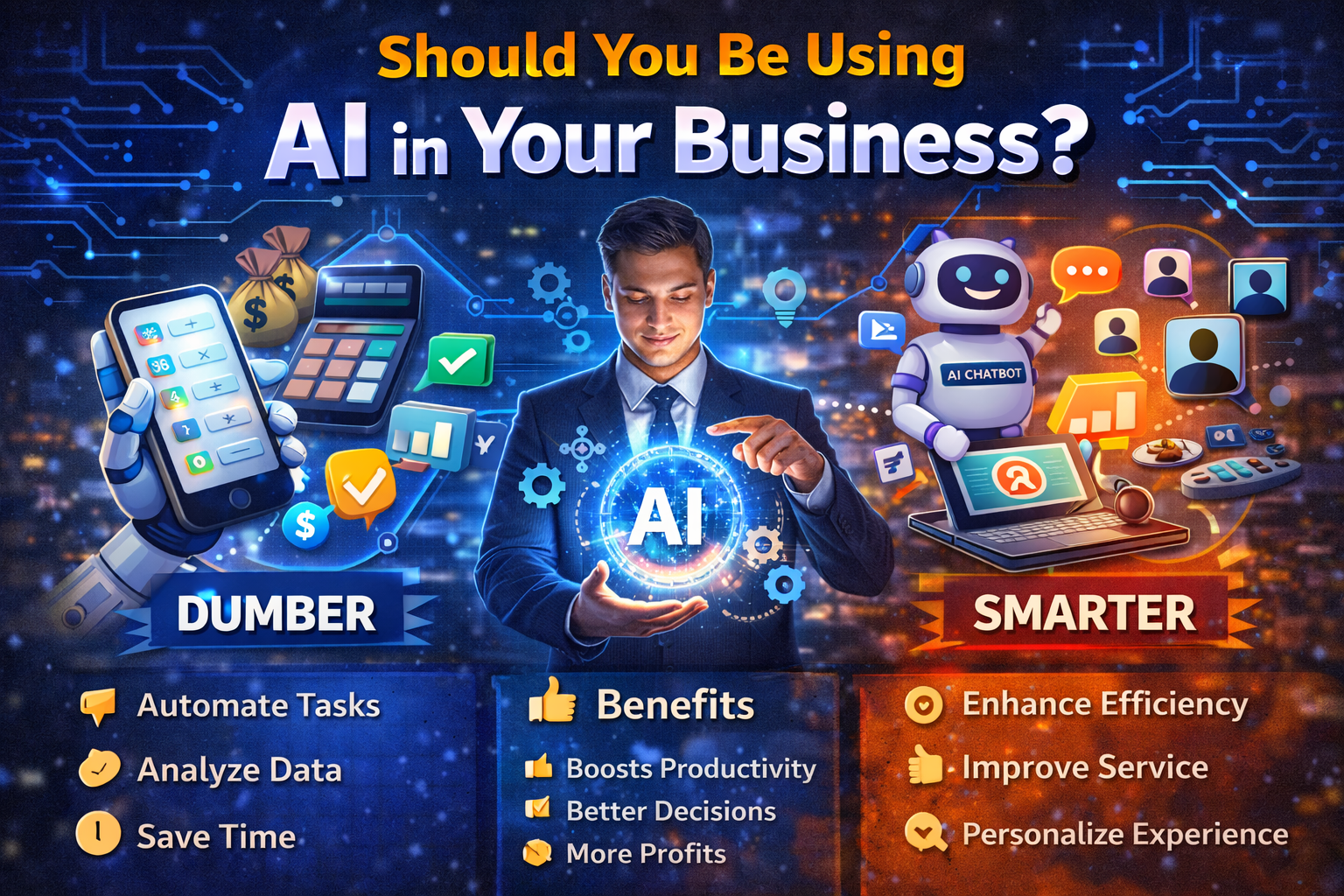

The year is 2026, and the digital landscape is abuzz with the transformative power of Artificial Intelligence. From automating mundane tasks to delivering personalized customer experiences, AI is no longer a futuristic concept but a present-day reality for countless enterprises. Yet, a fundamental question continues to resonate across boardrooms and small business offices: should you be using AI in your business? This comprehensive guide will delve into the multifaceted aspects of integrating AI, exploring its undeniable benefits, inherent challenges, and strategic considerations to help you make an informed decision for your organization’s future.
Key Takeaways
- Strategic Imperative: AI is rapidly becoming a competitive necessity, not just an option, for businesses aiming for efficiency, innovation, and growth in 2026 and beyond.
- Diverse Applications: AI can be applied across virtually all business functions, from automating customer service and marketing to optimizing supply chains and developing new products.
- Data is King: Successful AI implementation hinges on high-quality, relevant data. Businesses must prioritize data collection, cleaning, and management.
- Ethical Considerations: Businesses must address ethical implications like data privacy, algorithmic bias, and job displacement when adopting AI.
- Start Small, Scale Smart: Begin with well-defined pilot projects to demonstrate value and build organizational readiness before scaling AI initiatives enterprise-wide.
What Exactly is AI in a Business Context?
Before exploring whether you should you be using AI in your business, it’s crucial to understand what AI truly entails within a commercial setting. Artificial Intelligence refers to the simulation of human intelligence processes by machines, especially computer systems. These processes include learning (the acquisition of information and rules for using the information), reasoning (using rules to reach approximate or definite conclusions), and self-correction.
In business, AI manifests in various forms:
- Machine Learning (ML): Algorithms that enable systems to learn from data without explicit programming. This is central to predictive analytics, recommendation engines, and fraud detection.
- Natural Language Processing (NLP): Allows computers to understand, interpret, and generate human language. Crucial for chatbots, voice assistants, and sentiment analysis.
- Computer Vision: Enables machines to “see” and interpret visual information, used in quality control, security, and autonomous vehicles.
- Robotics Process Automation (RPA): Software robots that automate repetitive, rule-based tasks, often used in back-office operations.
Understanding these distinctions helps businesses identify specific areas where AI can provide the most value, moving beyond the buzzwords to practical applications.
The Irrefutable Benefits: Why You Should Be Using AI in Your Business
The advantages of integrating AI into business operations are extensive and continue to grow as the technology matures. For any business asking, “should you be using AI in your business,” the answer often lies in the significant return on investment and competitive edge it provides.
Enhanced Operational Efficiency and Automation
One of the most immediate and tangible benefits of AI is its ability to streamline operations and automate repetitive tasks. This frees human employees to focus on more strategic, creative, and complex problem-solving.
- Automated Customer Service: AI-powered chatbots and virtual assistants can handle a high volume of customer inquiries 24/7, improving response times and customer satisfaction. This can significantly reduce the workload on human customer service teams.
- Process Optimization: AI can analyze vast amounts of data to identify bottlenecks and inefficiencies in workflows. For example, in manufacturing, AI can optimize production schedules and predict equipment failures, leading to less downtime and higher output [1]. Businesses can learn more about how AI can optimize business processes for maximum efficiency.
- Data Entry and Analysis: AI tools can automate data extraction, entry, and initial analysis, drastically reducing manual errors and saving countless hours.
Improved Decision-Making with Data-Driven Insights
AI’s capacity to process and analyze massive datasets far exceeds human capabilities. This leads to more accurate predictions and data-driven insights that inform better business decisions.
- Predictive Analytics: AI algorithms can predict future trends, customer behavior, and market shifts based on historical data. This helps businesses anticipate demand, manage inventory, and make proactive strategic moves.
- Personalized Marketing: By analyzing customer data, AI can segment audiences and deliver highly personalized marketing campaigns, increasing engagement and conversion rates. Think of personalized product recommendations or targeted advertisements.
- Risk Management: AI can identify potential risks, such as financial fraud or supply chain disruptions, by analyzing patterns that might be imperceptible to humans.
Cost Reduction and Increased Profitability
By enhancing efficiency and improving decision-making, AI directly contributes to cost savings and increased profitability.
- Reduced Labor Costs: Automating tasks can reduce the need for manual labor in certain areas, though it often shifts human roles rather than eliminating them entirely.
- Optimized Resource Allocation: AI helps businesses allocate resources more effectively, from optimizing energy consumption in facilities to managing inventory levels precisely, reducing waste.
- Fraud Detection: AI’s ability to detect fraudulent transactions can save businesses significant amounts of money in various sectors, from finance to e-commerce.
Enhanced Customer Experience
In today’s competitive market, customer experience is paramount. AI plays a crucial role in delivering personalized and seamless interactions.
- 24/7 Support: As mentioned, chatbots provide instant support, resolving issues promptly and improving customer satisfaction.
- Personalized Recommendations: AI-driven recommendation engines, common in e-commerce and media streaming, enhance the customer journey by suggesting products or content tailored to individual preferences.
- Sentiment Analysis: AI can analyze customer feedback from various channels (social media, reviews, emails) to gauge sentiment and identify areas for improvement in products or services.
Innovation and New Business Opportunities
AI is not just about optimizing existing processes; it’s a powerful catalyst for innovation, enabling businesses to create new products, services, and business models.
- Product Development: AI can analyze market trends and customer feedback to inform the development of new products or features. For instance, AI in healthcare can accelerate drug discovery [2].
- Content Generation: AI can assist in generating various forms of content, from marketing copy to initial drafts of business plans. For those wondering, can AI effectively write a business plan? The answer is increasingly yes, with human oversight.
- New Service Models: AI enables businesses to offer entirely new services, such as predictive maintenance as a service or highly customized advisory roles.
Challenges and Considerations: When Should You Be Using AI in Your Business?
Despite the compelling benefits, integrating AI is not without its hurdles. Businesses considering, “should you be using AI in your business,” must critically evaluate these challenges.
Data Quality and Availability
AI models are only as good as the data they are trained on. Poor quality, insufficient, or biased data can lead to inaccurate insights and flawed decisions.
- Data Silos: Many organizations struggle with data stored in disparate systems, making it difficult to consolidate for AI training.
- Data Cleaning: Raw data often contains errors, inconsistencies, and missing values, requiring extensive cleaning and pre-processing, which can be time-consuming and costly.
- Data Bias: If historical data reflects human biases, AI trained on this data will perpetuate and even amplify those biases, leading to unfair or discriminatory outcomes.
Implementation Complexity and Technical Expertise
Integrating AI is a complex undertaking that requires specialized skills and robust infrastructure.
- Talent Gap: There is a significant shortage of skilled AI professionals, including data scientists, machine learning engineers, and AI strategists [3].
- Integration Challenges: AI systems need to integrate seamlessly with existing IT infrastructure, which can be challenging, especially for legacy systems.
- Computational Resources: Training and running advanced AI models often require substantial computational power and storage, necessitating investments in understanding computer hardware components and functions.
Cost of Investment
While AI offers long-term cost savings, the initial investment can be substantial.
- Software and Hardware: Licensing AI platforms, purchasing specialized hardware (like powerful GPUs), and cloud computing costs can be considerable.
- Development and Customization: Tailoring AI solutions to specific business needs often requires significant development and customization efforts.
- Maintenance and Updates: AI models require continuous monitoring, retraining, and updates to remain effective as data patterns change.
Ethical and Societal Implications
The ethical dimensions of AI are paramount and must be carefully addressed.
- Privacy Concerns: AI often relies on processing vast amounts of personal data, raising significant privacy concerns and requiring strict adherence to regulations like GDPR.
- Algorithmic Bias: As mentioned, biased data can lead to unfair or discriminatory AI outcomes, particularly in areas like hiring, lending, or criminal justice.
- Job Displacement: While AI creates new jobs, it also automates tasks traditionally performed by humans, leading to concerns about job displacement in certain sectors. Responsible businesses must plan for reskilling and upskilling their workforce.
- Transparency and Explainability: Understanding how AI models arrive at their conclusions (the “black box” problem) is crucial for trust, accountability, and debugging, especially in critical applications.
Organizational Readiness and Change Management
Successful AI adoption requires more than just technology; it demands organizational buy-in and a culture willing to embrace change.
- Resistance to Change: Employees may be resistant to new technologies, fearing job loss or the need to learn new skills.
- Lack of Clear Strategy: Without a clear AI strategy aligned with business objectives, initiatives can fail to deliver value.
- Insufficient Leadership Buy-in: Top-level support is critical for allocating resources and driving AI adoption across the organization.
Strategic Approach: How to Determine If You Should Be Using AI in Your Business
Given the benefits and challenges, a strategic approach is essential when deciding, “should you be using AI in your business?”
1. Identify Clear Business Problems and Opportunities
Do not implement AI for AI’s sake. Start by identifying specific business problems that AI could solve or opportunities it could unlock.
- Pain Points: Are there repetitive, time-consuming tasks? Areas with high error rates? Gaps in customer service?
- Growth Opportunities: Can AI help personalize offerings, enter new markets, or develop innovative products?
- Competitive Landscape: What are your competitors doing with AI? Are they gaining an edge you need to match?
2. Assess Data Readiness
Evaluate the quality, quantity, and accessibility of your data.
- Data Audit: Conduct an audit to understand what data you have, where it resides, and its quality.
- Data Governance: Establish clear policies for data collection, storage, security, and usage.
- Data Strategy: Develop a long-term data strategy to ensure a continuous supply of high-quality, relevant data for AI.
3. Start Small with Pilot Projects
Rather than undertaking a massive, organization-wide AI overhaul, begin with small, manageable pilot projects.
- Proof of Concept: Choose a well-defined project with clear objectives and measurable outcomes. This could be automating a single customer service function or optimizing a specific marketing campaign.
- Learn and Iterate: Use pilot projects to learn about the technology, fine-tune processes, and demonstrate value. This builds internal confidence and gathers support for broader implementation.
- For guidance, consider a step-by-step guide to integrating AI into your business.
4. Build or Acquire AI Talent
Address the talent gap by either training existing employees or hiring specialized AI professionals.
- Upskilling: Invest in training programs for your current workforce to equip them with AI literacy and specific technical skills.
- Strategic Hires: Recruit data scientists, machine learning engineers, and AI ethics specialists.
- Partnerships: Consider partnering with AI consultancies or vendors to leverage their expertise.
5. Prioritize Ethical AI Development
Integrate ethical considerations into every stage of your AI strategy.
- Bias Mitigation: Actively work to identify and mitigate biases in your data and algorithms.
- Transparency: Strive for explainable AI where possible, especially in critical decision-making applications.
- Privacy by Design: Ensure data privacy and security are built into your AI systems from the ground up.
6. Foster a Culture of Innovation and Adaptability
AI implementation is a journey, not a destination. Encourage a mindset of continuous learning and adaptation.
- Leadership Endorsement: Ensure leadership champions AI initiatives and communicates their strategic importance.
- Cross-Functional Collaboration: Promote collaboration between IT, business units, and AI teams.
- Continuous Monitoring: Regularly monitor the performance of AI systems, measure ROI, and be prepared to refine or pivot as needed.
Industry-Specific Applications: Where Should You Be Using AI in Your Business in 2026?
The applications of AI are incredibly diverse, impacting nearly every sector. Examining specific industries helps answer, “should you be using AI in your business” more concretely. For a deeper dive, consider exploring how AI is transforming different business sectors.
Retail and E-commerce
- Personalized Shopping Experiences: AI powers recommendation engines, personalized promotions, and dynamic pricing.
- Inventory Management: Predicting demand more accurately to optimize stock levels and reduce waste.
- Chatbots and Virtual Assistants: Providing instant customer support and guiding shoppers through the purchasing process.
- Fraud Detection: Identifying suspicious transactions to protect both the business and customers.
Healthcare
- Diagnostic Assistance: AI aids in analyzing medical images (X-rays, MRIs) to detect diseases earlier and more accurately.
- Drug Discovery: Accelerating the research and development of new medications by analyzing vast biological datasets.
- Personalized Treatment Plans: Tailoring treatments to individual patient genetics and health profiles.
- Administrative Automation: Streamlining tasks like appointment scheduling, billing, and electronic health record management.
Finance
- Fraud Detection: Identifying anomalous transactions in real-time to prevent financial crime.
- Algorithmic Trading: AI-powered systems execute trades at high speeds based on complex market analysis.
- Credit Scoring: Improving the accuracy of credit risk assessments.
- Customer Service: Chatbots and virtual assistants providing financial advice and support.
Manufacturing
- Predictive Maintenance: AI analyzes sensor data from machinery to predict when maintenance is needed, preventing costly breakdowns.
- Quality Control: Computer vision systems identify defects in products with high precision and speed.
- Supply Chain Optimization: Forecasting demand, optimizing logistics, and managing inventory to reduce costs and improve efficiency.
- Robotics: Automating assembly lines and hazardous tasks.
Marketing and Sales
- Lead Scoring: AI identifies and prioritizes the most promising sales leads.
- Content Creation: Generating marketing copy, social media posts, and even video scripts.
- Customer Segmentation: Creating highly granular customer segments for targeted campaigns.
- Sales Forecasting: Predicting future sales performance based on various market indicators.
The Future Impact of AI on Business in 2026 and Beyond
The trajectory of AI suggests an even more profound impact in the coming years. By 2026, many businesses are past the initial exploration phase and are actively integrating AI as a core component of their strategy. The question for many is no longer if, but how deeply and how quickly the future impact of AI on business will reshape their operations.
We can anticipate:
- Hyper-Personalization at Scale: AI will enable businesses to deliver incredibly precise, individualized experiences across all customer touchpoints, making generic approaches obsolete.
- Autonomous Operations: More business processes will become fully autonomous, requiring minimal human intervention, particularly in areas like logistics, manufacturing, and data management.
- AI-Driven Innovation: AI will increasingly be a co-creator, not just a tool, in product development, scientific discovery, and artistic endeavors, leading to breakthroughs currently unimaginable.
- Augmented Human Intelligence: Rather than replacing humans, AI will increasingly augment human capabilities, acting as a powerful co-pilot for decision-making, creativity, and problem-solving across all roles. This means a greater focus on leveraging AI to improve your business through human-AI collaboration.
- Advanced Cybersecurity: AI will become critical in detecting and responding to increasingly sophisticated cyber threats, offering dynamic protection for business assets.
The businesses that embrace AI strategically in 2026 are positioning themselves for sustained growth and resilience in an ever-evolving market. Those that hesitate risk falling behind.
Conclusion
The question of “should you be using AI in your business” in 2026 is no longer a matter of if, but how and when. The compelling benefits of enhanced efficiency, superior decision-making, cost reduction, and unprecedented innovation make AI a strategic imperative for businesses aiming to thrive in the modern era. However, successful AI adoption demands a clear understanding of its complexities, a commitment to data quality, significant investment, careful ethical consideration, and a proactive approach to change management.
For businesses ready to embark on this transformative journey, the actionable next steps involve:
- Strategic Alignment: Clearly define how AI aligns with your overarching business goals.
- Data Foundation: Invest in building a robust data infrastructure and governance framework.
- Phased Implementation: Start with targeted pilot projects to gain experience and demonstrate value.
- Talent Development: Cultivate internal AI expertise or seek strategic partnerships.
- Ethical Oversight: Integrate ethical considerations and bias mitigation throughout your AI lifecycle.
By embracing AI with a thoughtful, strategic approach, businesses can unlock immense potential, driving growth, fostering innovation, and securing a competitive advantage in 2026 and for decades to come. The future is intelligent, and your business can be too.
Frequently Asked Questions about AI in Business
The main benefit of using AI in business is its ability to significantly enhance operational efficiency and automate repetitive tasks, freeing human employees for more strategic work. It also provides unparalleled data-driven insights for improved decision-making.
Yes, initial investments in AI can be substantial, including costs for software licenses, specialized hardware, cloud computing resources, development, customization, and ongoing maintenance. However, these are often offset by long-term cost savings and increased profitability.
Small businesses should start by identifying a clear, specific problem AI can solve. Begin with a small-scale pilot project, focus on data readiness, and consider leveraging readily available AI tools or partnering with consultants, rather than a full-scale overhaul.
How to Implement AI in Your Business Effectively
Key AI Terminology for Business
Conclusion
The question of “should you be using AI in your business” in 2026 is no longer a matter of if, but how and when. The compelling benefits of enhanced efficiency, superior decision-making, cost reduction, and unprecedented innovation make AI a strategic imperative for businesses aiming to thrive in the modern era. However, successful AI adoption demands a clear understanding of its complexities, a commitment to data quality, significant investment, careful ethical consideration, and a proactive approach to change management.
For businesses ready to embark on this transformative journey, the actionable next steps involve:
- Strategic Alignment: Clearly define how AI aligns with your overarching business goals.
- Data Foundation: Invest in building a robust data infrastructure and governance framework.
- Phased Implementation: Start with targeted pilot projects to gain experience and demonstrate value.
- Talent Development: Cultivate internal AI expertise or seek strategic partnerships.
- Ethical Oversight: Integrate ethical considerations and bias mitigation throughout your AI lifecycle.
By embracing AI with a thoughtful, strategic approach, businesses can unlock immense potential, driving growth, fostering innovation, and securing a competitive advantage in 2026 and for decades to come. The future is intelligent, and your business can be too.

 By
By
 By
By