
In an era defined by rapid technological advancements, the concept of “liquid technology” might seem abstract, yet it’s fundamentally reshaping how we interact with the digital and physical worlds. Far from being a niche concept, understanding what is liquid technology is becoming crucial for businesses and individuals aiming to stay competitive and efficient in 2026 and beyond. This article will dive deep into this transformative paradigm, exploring its definition, core principles, diverse applications, and the profound impact it’s having across various industries. Get ready to explore a world where flexibility, adaptability, and seamless integration are not just buzzwords, but the very essence of technological progress.
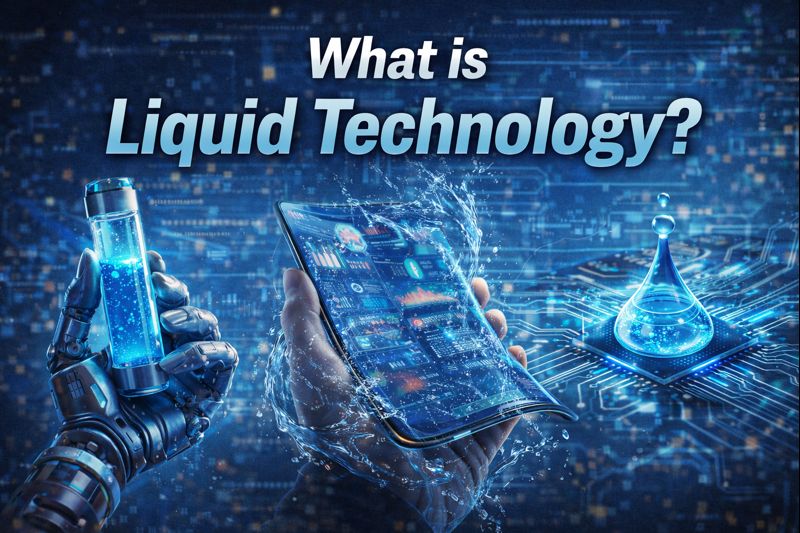
Liquid technology represents a shift from rigid, fixed systems to fluid, adaptable, and interconnected components that can dynamically reconfigure and respond to changing demands. It’s about breaking down silos and enabling technology to flow, much like a liquid, across different platforms, devices, and environments. This paradigm prioritizes agility, interoperability, and the ability to compose and recompose technological solutions on the fly, offering unprecedented flexibility and efficiency.
Key Takeaways
- Definition: Liquid technology refers to IT systems and components designed for extreme flexibility, adaptability, and seamless integration, allowing them to dynamically reconfigure and respond to evolving needs.
- Core Principles: It emphasizes modularity, interoperability, scalability, and reusability, moving away from monolithic structures.
- Broad Applications: From advanced cooling systems and display technologies to data management, AI deployments, and manufacturing, liquid tech is pervasive.
- Benefits: Offers enhanced efficiency, resilience, innovation speed, cost savings, and improved user experiences across diverse sectors.
- Future Impact: Poised to be a cornerstone of future technological infrastructure, driving advancements in AI, IoT, cloud computing, and smart environments.
Defining What is Liquid Technology: A Core Concept for 2026
At its heart, what is liquid technology refers to a philosophy and a set of architectural approaches that prioritize fluidity, flexibility, and dynamic adaptability in technological systems. Imagine water, which can take the shape of any container it’s poured into; similarly, liquid technology allows computing resources, data, and applications to adapt and flow across different environments, hardware, and user needs with minimal friction. This goes beyond mere virtualization or cloud computing; it’s about an inherent design principle that favors modularity, composability, and the ability to reconfigure on demand.
In the context of 2026, this concept is particularly relevant as businesses grapple with increasingly complex IT landscapes, the demand for instant scalability, and the need for personalized experiences. Traditional, rigid IT infrastructures struggle to keep pace with these demands. Liquid technology offers a solution by enabling systems to be built from smaller, independent, and interchangeable components that can be assembled, disassembled, and reassembled as needed, much like LEGO bricks.
The Essence of Liquid Technology: Fluidity and Agility
The core essence of liquid technology lies in its ability to empower fluidity and agility. This means:
- Dynamic Resource Allocation: Computing power, storage, and network bandwidth can be allocated and de-allocated in real-time based on demand, ensuring optimal performance and cost-efficiency.
- Interoperability: Different systems and applications can communicate and work together seamlessly, regardless of their underlying platform or programming language.
- Modularity: Complex systems are broken down into smaller, independent modules that can be developed, deployed, and updated autonomously.
- Composability: These modules can be easily combined and recombined to create new services, applications, or solutions, accelerating innovation.
This approach significantly reduces the time and effort required to adapt to new market conditions, integrate new services, or scale existing operations.
The Pillars of Liquid Technology: Key Principles and Characteristics
To fully grasp what is liquid technology, it’s essential to understand the foundational principles that underpin it. These pillars are not isolated concepts but rather interconnected elements that collectively enable the fluid and adaptive nature of modern technological systems.
Modularity and Microservices
One of the most significant shifts driven by liquid technology is the move towards modularity. Instead of monolithic applications where all components are tightly coupled, liquid systems are built using independent, loosely coupled modules, often implemented as microservices. Each microservice performs a specific function and can be developed, deployed, and scaled independently.
- Benefits of Microservices:
- Faster development and deployment cycles
- Improved fault isolation (failure in one service doesn’t bring down the whole system)
- Easier scalability of individual components
- Greater flexibility in choosing technology stacks for different services
This granular approach makes systems inherently more adaptable and resilient.
API-First Design and Interoperability
Central to the concept of fluidity is seamless communication between different components and systems. API-first design ensures that all services and data sources expose well-defined Application Programming Interfaces (APIs), allowing them to be easily consumed and integrated by other applications. This fosters true interoperability, enabling a diverse ecosystem of technologies to work together harmoniously.
- Example: A business might integrate an AI-powered customer service bot a step-by-step guide to integrating AI into your business that uses APIs to access customer data from a CRM system and product information from an inventory database, all while operating on a different cloud platform.
Cloud-Native Architectures
Liquid technology thrives in cloud-native environments. Cloud platforms provide the on-demand resources, scalability, and managed services necessary to build and run highly flexible applications. Concepts like serverless computing, containers (e.g., Docker, Kubernetes), and Function-as-a-Service (FaaS) are natural enablers of liquid technology, allowing developers to focus on code rather than infrastructure.
Data Liquidity and Stream Processing
Just as applications need to be fluid, so too does data. Data liquidity refers to the ability for data to move freely and be accessed consistently across different systems, databases, and environments. This often involves technologies like data streaming, real-time analytics, and universal data formats. The goal is to eliminate data silos and ensure that information is available where and when it’s needed, driving better decision-making and more responsive applications.
Automation and Orchestration
To manage the complexity of dynamically reconfiguring and deploying fluid systems, automation and orchestration are paramount. Tools and platforms that automate the provisioning, deployment, scaling, and management of infrastructure and applications are essential for realizing the full benefits of liquid technology. This includes Continuous Integration/Continuous Deployment (CI/CD) pipelines, infrastructure-as-code, and advanced orchestration engines.
Applications of Liquid Technology Across Industries
The implications of what is liquid technology extend far beyond theoretical discussions, manifesting in tangible innovations across a multitude of sectors. From the very hardware that powers our digital world to sophisticated software ecosystems, its influence is widespread.
1. Hardware Cooling and Thermal Management
🌬
️
💧
Looking at liquid unlocking flow alongside weak mean business unlocking gives a clearer view of the wider topic.
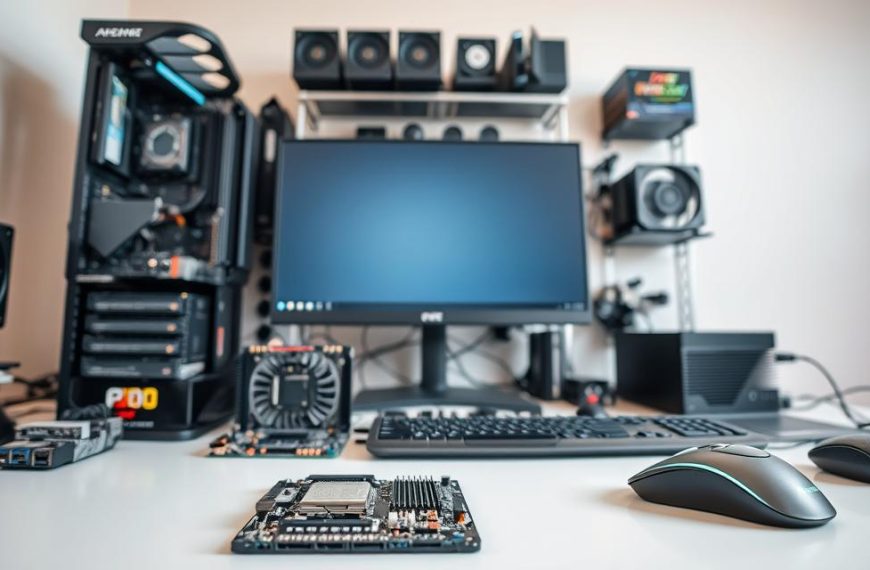
One of the most literal interpretations of “liquid technology” involves using fluids for thermal management. In high-performance computing, data centers, and even gaming PCs, liquid cooling systems are becoming indispensable. These systems circulate specialized coolants (like water or dielectric fluids) through components to dissipate heat much more efficiently than air cooling.
- In Data Centers: Immersion cooling, where servers are submerged in non-conductive liquid, is a cutting-edge application. This allows for higher server density, reduced energy consumption for cooling, and quieter operation [1].
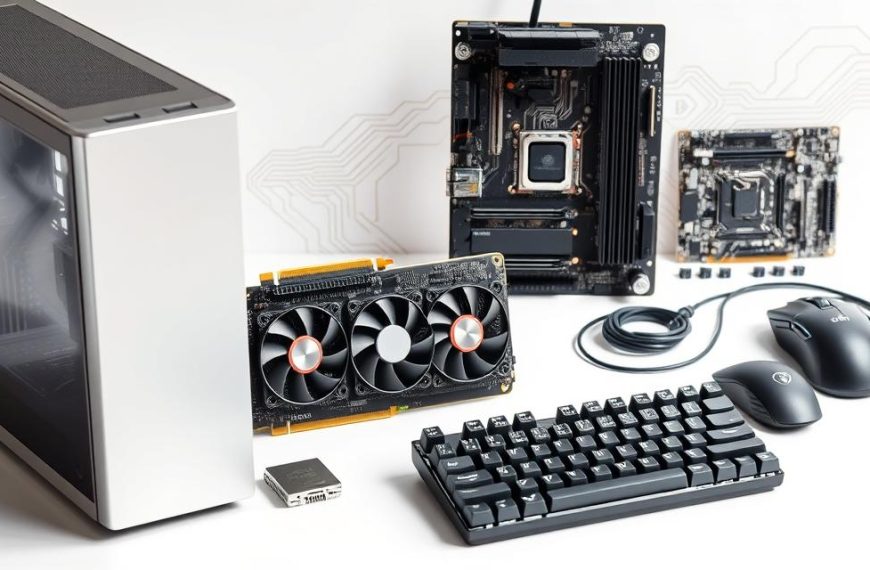
- In Gaming & PCs: Advanced CPU and GPU liquid coolers are common, allowing enthusiasts to push hardware performance further without overheating. Understanding your computer hardware explained can help appreciate the role of such cooling. The role of free space in gaming PC cooling efficiency highlights the importance of effective thermal management.
2. Advanced Display Technologies
📱
📺
Liquid crystal displays (LCDs) are perhaps the most well-known example of liquid technology in consumer electronics. These displays manipulate liquid crystals to control light transmission, forming the images we see on screens daily. Beyond traditional LCDs, new frontiers are being explored:
- E-Ink Displays: Used in e-readers, these displays use microscopic capsules containing charged black and white particles suspended in a clear fluid. An electrical charge moves these particles, creating text and images that mimic paper.
- Microfluidic Displays: Emerging research is looking into using microfluidics to create ultra-responsive, highly customizable displays with dynamic properties.
3. Liquid Software and Adaptive Architectures
💻
🌐
This is where the metaphor of “liquid” truly shines in the digital realm. Liquid software refers to applications and systems designed to be highly adaptive, reconfigurable, and portable across different environments.
- Containerization: Technologies like Docker and Kubernetes package applications and their dependencies into portable “containers” that can run consistently on any infrastructure – be it a developer’s laptop, an on-premise server, or any cloud platform. This makes software deployment truly fluid.
- Serverless Computing: Developers write code functions that run on demand, without managing servers. The underlying infrastructure scales automatically and seamlessly, offering a truly “liquid” computing experience where resources flow to meet demand.
- Microservices Architectures: As discussed earlier, breaking down applications into small, independent services facilitates rapid development, deployment, and scalability, making the entire software ecosystem more fluid and resilient. This approach is key to leveraging AI to improve your business by enabling agile development of AI-powered features.
4. Liquid Data and Analytics
📊
📈
For data to be truly valuable, it needs to be accessible, shareable, and analyzable across disparate systems. Liquid data refers to the ability for data to flow freely and consistently throughout an organization’s ecosystem.
- Data Streaming Platforms: Technologies like Apache Kafka enable real-time data ingestion and processing, allowing businesses to react instantly to events. This is vital for applications requiring immediate insights, such as fraud detection or real-time recommendation engines.
- Data Virtualization: This allows users to access and combine data from multiple, disparate sources without physically moving or replicating it. It creates a “single pane of glass” for data, making it appear as one cohesive liquid pool.
- Data Lakes & Lakehouses: These architectures are designed to store vast amounts of raw data in various formats, making it readily available for different analytical tools and AI models.
5. Liquid Robotics and Soft Robotics 🤖
🖐
️
In the field of robotics, “liquid technology” takes on a fascinating physical form.
- Soft Robotics: These robots are built from compliant, deformable materials rather than rigid components. They can adapt their shape to interact safely with fragile objects or navigate complex, confined spaces, mimicking the flexibility of biological organisms [2].
- Liquid Metal Robotics: While still largely in research, the concept of robots made from liquid metals that can change shape and self-heal is a futuristic application, drawing inspiration from science fiction.
6. Liquid Manufacturing and Programmable Matter 🏭🧬
The manufacturing sector is also embracing fluidity.
- Additive Manufacturing (3D Printing): While not purely “liquid,” many 3D printing processes use liquid resins or melted materials that are solidified layer by layer to create complex objects, offering unprecedented flexibility in design and production.
- Programmable Matter: This refers to materials that can change their physical properties (shape, stiffness, color) on demand. While still highly experimental, imagine fabrics that can insulate or cool based on environmental conditions, or tools that reconfigure for different tasks.
The Advantages of Embracing Liquid Technology
The strategic adoption of what is liquid technology offers a compelling suite of benefits for organizations seeking to thrive in the dynamic technological landscape of 2026. These advantages translate into significant improvements in operational efficiency, innovation capacity, and overall business resilience.
| Advantage | Description | Impact |
|---|---|---|
| Increased Agility | Systems can be rapidly adapted, scaled, and reconfigured in response to changing market demands, customer feedback, or emerging threats. | Businesses can pivot quickly, launch new products or services faster, and respond to competitive pressures with greater speed. This is crucial for optimizing business processes. |
| Enhanced Scalability | Resources (compute, storage, network) can be dynamically scaled up or down based on actual usage, preventing over-provisioning or performance bottlenecks. | Optimal resource utilization, reduced infrastructure costs, and the ability to handle unexpected surges in demand without service disruption. |
| Greater Resilience | Modular architectures mean that the failure of one component is less likely to bring down the entire system. Redundancy and self-healing mechanisms are inherent. | Improved uptime, continuous service availability, and faster recovery from outages, leading to higher customer satisfaction and trust. |
| Accelerated Innovation | Developers can rapidly prototype, test, and deploy new features or entire applications by assembling pre-built modules or leveraging flexible cloud services. | Shorter time-to-market for new ideas, fostering a culture of experimentation and continuous improvement. This supports the development of new AI applications and services. |
| Cost Efficiency | Pay-as-you-go cloud models, optimized resource allocation, and reduced operational overhead contribute to significant cost savings in IT infrastructure. | Lower capital expenditure, predictable operational costs, and the ability to reallocate budget to innovation rather than maintenance. |
| Improved Interoperability | Standardized APIs and modular design allow diverse systems and applications to communicate and integrate seamlessly. | Elimination of data silos, better data flow, and the ability to create more comprehensive and intelligent solutions by combining capabilities from different vendors or internal systems. |
| Future-Proofing | By embracing flexible, adaptive architectures, organizations are better prepared to integrate future technologies and adapt to unforeseen changes. | Reduced risk of technological obsolescence and a smoother transition to emerging paradigms like advanced AI, quantum computing, or new IoT devices. This is vital when considering the future impact of AI on business. |
These benefits collectively empower organizations to build more robust, responsive, and competitive digital foundations, making them well-equipped for the challenges and opportunities of the coming years.
💬 Pull Quote: “Liquid technology isn’t just about adopting new tools; it’s a fundamental shift in mindset. It’s moving from building rigid structures to cultivating dynamic ecosystems that can evolve organically with user needs and technological advancements.” – Tech Innovator, 2026
Challenges and Considerations for Implementation
While the benefits of understanding what is liquid technology are compelling, its adoption is not without hurdles. Implementing truly liquid systems requires careful planning, significant cultural shifts, and addressing several technical complexities.
1. Architectural Complexity 🤯
Building modular, distributed systems can be more complex than developing monolithic applications, especially initially. Managing numerous microservices, their interdependencies, and distributed data stores requires sophisticated orchestration and monitoring tools. Debugging issues across a distributed architecture can also be more challenging.
2. Security Concerns 🔒
With more components, APIs, and data flowing across different environments, the attack surface expands. Ensuring consistent security policies, identity and access management, and data protection across a highly distributed and fluid system demands robust security frameworks and continuous vigilance.
3. Data Management and Consistency 💾
Maintaining data consistency and integrity across multiple, often independently scaled and deployed services can be a significant challenge. Distributed databases, event-driven architectures, and careful data partitioning strategies are often necessary but add complexity.
4. Cultural and Organizational Shift 🧑
💻➡
️🤝
Perhaps the biggest hurdle is the organizational change required. Moving to a liquid technology paradigm often necessitates:
- DevOps Culture: Breaking down silos between development, operations, and security teams.
- Skill Gaps: Training existing staff or hiring new talent with expertise in cloud-native technologies, microservices, and automation.
- Governance: Establishing new governance models for managing decentralized development and deployments.
5. Vendor Lock-in (Paradoxically) 🤝➡
️
🔗
While liquid technology aims for interoperability, reliance on specific cloud provider services or proprietary container orchestration platforms can inadvertently lead to a new form of vendor lock-in. Strategic choices are needed to maintain flexibility across multiple cloud environments or with open-source alternatives.
6. Monitoring and Observability 👀
In a fluid system with dynamically changing components, traditional monitoring tools may fall short. Comprehensive observability (logging, metrics, tracing) is essential to understand system behavior, troubleshoot issues, and optimize performance in real-time.
Overcoming these challenges requires a strategic, phased approach, investing in the right tools and talent, and fostering a culture of continuous learning and adaptation.
The Future of Liquid Technology in 2026 and Beyond
As we look towards the horizon, what is liquid technology is not just a passing trend but a foundational shift that will continue to evolve and deepen its impact. Its principles will be central to many emerging technological paradigms, shaping the future of how we design, deploy, and interact with digital systems.
1. Hyper-Personalization and Adaptive Experiences 🧑🤝🧑✨
The ability of liquid technology to dynamically reconfigure and deliver resources on demand will enable unprecedented levels of hyper-personalization. Applications and services will adapt not just to individual user preferences but also to their real-time context, location, and emotional state, delivering truly fluid and intuitive experiences.
2. Edge Computing and Distributed Intelligence
🌐
�
�
As more data is generated at the “edge” (e.g., IoT devices, smart factories, autonomous vehicles), liquid technology will be critical for processing and acting on that data locally. Fluid architectures will allow AI models and applications to seamlessly shift between the cloud and the edge, optimizing for latency, bandwidth, and privacy. This will be key for how AI is transforming different business sectors.
3. AI and Machine Learning Infrastructure 🧠📈
The demands of AI and machine learning (ML) for flexible, scalable, and powerful computing resources align perfectly with liquid technology principles.
- Fluid AI Pipelines: Training and deploying ML models involve complex, multi-stage pipelines that benefit immensely from modular, containerized, and serverless approaches.
- Adaptive AI: Future AI systems will likely be composed of multiple, specialized liquid AI components that can be dynamically swapped in and out based on the task at hand, leading to more versatile and efficient AI. This is a crucial aspect of the future of AI: how it will shape business in the next decade.
4. Quantum-Cloud Integration ⚛
️☁
️
While still nascent, the eventual integration of quantum computing resources into classical cloud environments will demand highly liquid architectures. Orchestrating quantum workloads alongside traditional computing tasks will require seamless resource allocation and data flow between vastly different computational paradigms.
5. Sustainable and Resilient Computing ♻
️
🛡
️
The ability of liquid technology to dynamically scale and optimize resource usage contributes significantly to more sustainable computing. By only consuming what is needed, energy waste is reduced. Furthermore, the inherent resilience of liquid architectures will be vital for building robust systems capable of withstanding environmental fluctuations and cyber threats.
6. Digital Twins and Metaverse Architectures
🌍↔
️
💻
Creating realistic and interactive digital twins or expansive metaverse environments requires immense computational flexibility. Liquid technology will enable the dynamic rendering, simulation, and data synchronization necessary for these complex, interconnected virtual worlds.
In essence, liquid technology is not merely a set of tools but a blueprint for building the next generation of interconnected, intelligent, and adaptable systems that will define our technological landscape for decades to come.
Conclusion: Embracing the Fluid Future
The journey through what is liquid technology reveals a profound shift in how we approach technological design and deployment. It’s a move away from rigid, static structures towards dynamic, adaptable, and interconnected systems that can respond with unprecedented agility to the ever-changing demands of the digital world. From literally flowing coolants in high-performance hardware to the metaphorical fluidity of cloud-native software and data streams, the principles of modularity, interoperability, and dynamic reconfigurability are becoming the bedrock of modern IT.
For businesses and innovators in 2026, understanding and strategically adopting liquid technology is not merely an option but a competitive imperative. It empowers organizations to build more resilient, efficient, and innovative systems, accelerate their time-to-market for new services, and ultimately deliver superior experiences to their customers. While challenges like architectural complexity and the need for cultural shifts exist, the benefits of enhanced agility, scalability, and cost efficiency far outweigh them.
As we look to the future, the influence of liquid technology will only grow, underpinning advancements in AI, edge computing, quantum integration, and the very fabric of our digital ecosystems. Embracing this fluid paradigm means preparing for a future where technology is not a fixed asset but a constantly evolving, self-optimizing force that can flow and adapt to any challenge or opportunity. The time to dive into the liquid future is now, ensuring your organization is ready to ride the waves of innovation for years to come.
References
[1] U.S. Department of Energy. (2023). Liquid Cooling Technologies for Data Centers. Retrieved from https://www.energy.gov/eere/amo/articles/liquid-cooling-technologies-data-centers
[2] Rus, D., & Tolley, M. T. (2015). Design, fabrication and control of soft robots. Nature, 521(7553), 465-472.
Frequently Asked Questions about Liquid Technology
What are the main types of liquid technology?
Liquid technology manifests in several forms, including literal liquid-based systems like liquid cooling for hardware and liquid crystal displays. More broadly, it refers to software architectures that are fluid and adaptive, such as microservices, containerization, and serverless computing. There’s also “liquid data” for flexible data management and even soft robotics utilizing fluid dynamics.
How does liquid technology benefit businesses in 2026?
In 2026, businesses leverage liquid technology for increased agility, allowing rapid adaptation to market changes. It provides enhanced scalability, optimizing resource use and reducing costs. Improved resilience ensures continuous operations, while accelerated innovation speeds up product development. This approach also leads to better interoperability between systems and helps future-proof IT infrastructure.
Is liquid technology the same as cloud computing?
No, liquid technology is a broader concept than cloud computing. While cloud computing provides the infrastructure (like IaaS, PaaS, SaaS) that enables much of liquid technology, liquid technology is an architectural philosophy that extends to how applications are designed, data is managed, and systems interact. Cloud-native architectures are a core enabler of liquid technology, but the concept itself encompasses more.
What are the challenges of implementing liquid technology?
Implementing liquid technology can present challenges such as increased architectural complexity (managing many microservices), enhanced security concerns due to a larger attack surface, and difficulties in maintaining data consistency across distributed systems. Furthermore, a significant cultural and organizational shift, including adopting DevOps practices and addressing skill gaps, is often required.
How to Implement Liquid Technology Principles in Your Business
Assess Current Infrastructure and Identify Bottlenecks
Begin by analyzing your existing IT systems for rigidities, monolithic applications, and areas where scalability or flexibility is lacking. Pinpoint processes that are slow, expensive to adapt, or prone to failure. This initial assessment helps in prioritizing where to apply liquid technology principles.
Adopt Cloud-Native Architectures and Microservices
Transition towards cloud-native solutions, leveraging public or hybrid cloud platforms. Break down large applications into smaller, independent microservices, each focused on a specific business capability. Utilize containerization technologies like Docker and Kubernetes for consistent deployment and scalability across environments.
Implement API-First Design and Data Streaming
Design all new services with an API-first approach, ensuring clear interfaces for communication. Foster data liquidity by implementing data streaming platforms (e.g., Apache Kafka) for real-time data flow between services and robust data virtualization solutions to access distributed data consistently.
Embrace DevOps and Automation
Cultivate a strong DevOps culture, integrating development, operations, and security teams. Automate your infrastructure provisioning (Infrastructure-as-Code), deployment pipelines (CI/CD), and operational tasks to reduce manual effort and human error, enabling continuous delivery and faster iteration.
Invest in Skill Development and Change Management
Provide training for your teams in cloud-native technologies, microservices best practices, and automation tools. Manage the cultural shift proactively, emphasizing collaboration and continuous learning. Foster an environment where experimentation and adaptation are encouraged.
Key Terms in Liquid Technology
- Microservices
An architectural style that structures an application as a collection of loosely coupled, independently deployable services, each performing a specific business function. They communicate through lightweight mechanisms, often APIs.
- Containerization
A virtualization method where applications and their dependencies are packaged into lightweight, portable units called containers. These containers can run consistently across different computing environments, ensuring portability and reducing “it works on my machine” issues.
- API-First Design
An approach to software development where the Application Programming Interface (API) is designed and developed before the implementation of the underlying system. This prioritizes how services communicate and interact, fostering interoperability.
- Data Liquidity
The ability for data to move freely, be accessed easily, and be consistently understood and utilized across various systems, applications, and environments within an organization, eliminating data silos.
- Serverless Computing
A cloud execution model where the cloud provider dynamically manages the allocation and provisioning of servers. Developers only write and deploy code (functions), and the provider automatically runs it in response to events, scaling resources as needed without explicit server management.

 By
By