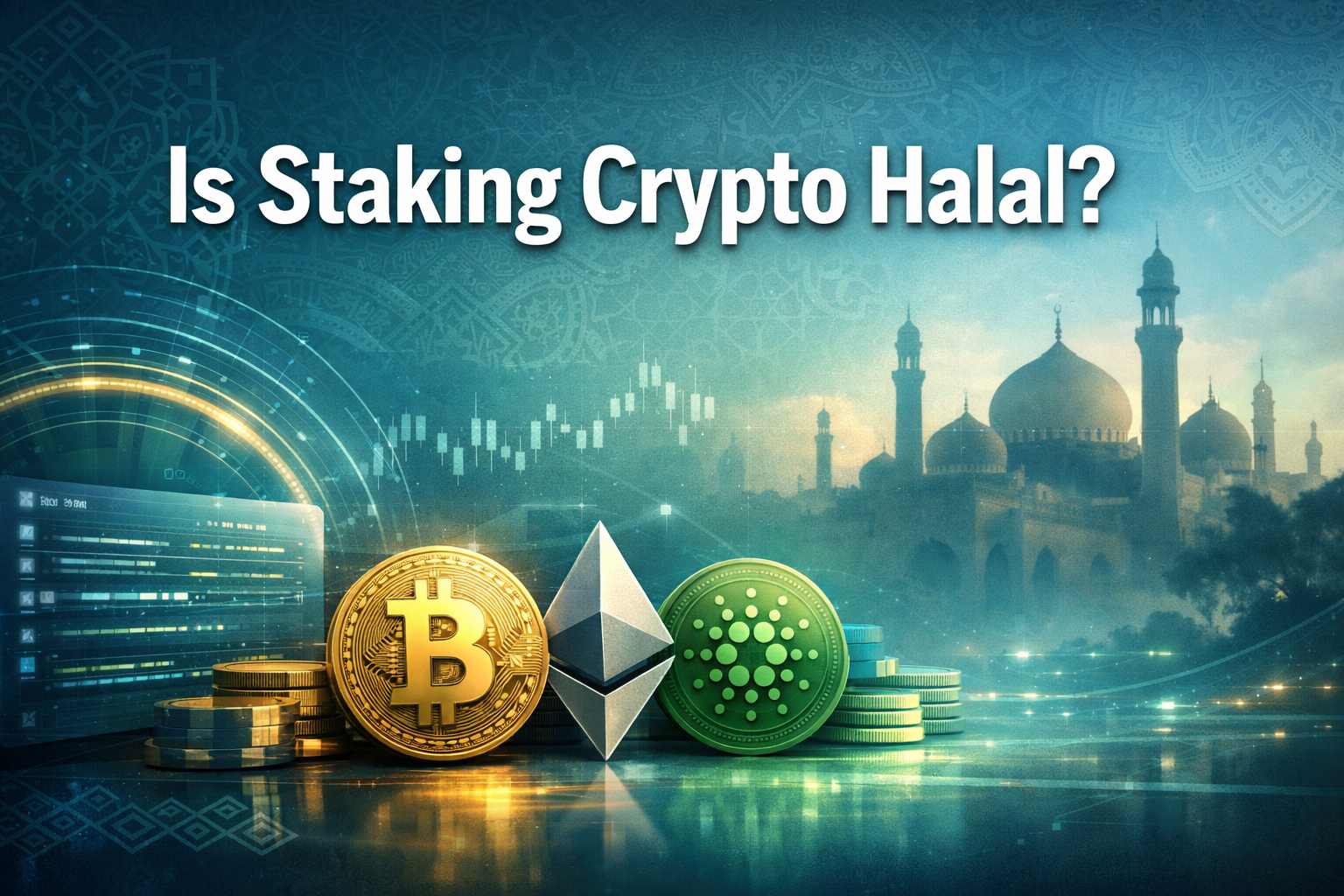

The world of cryptocurrency continues to evolve at an astonishing pace, presenting both exciting opportunities and complex ethical dilemmas, especially for those adhering to Islamic finance principles. One such area sparking considerable debate is staking crypto. As a Muslim investor navigating the digital frontier in 2026, a critical question aris
Anyone researching staking halal comprehensive may also want to understand can buy moomoo comprehensive before deciding on the best option.
es: is staking crypto halal? This comprehensive article will delve into the intricacies of staking, examine its alignment with Sharia law, and provide clarity for individuals seeking to make informed, religiously compliant investment decisions. Understanding whether the rewards generated from locking up digital assets are permissible under Islamic guidelines is paramount for many.
Key Takeaways
- Sharia Compliance is Complex: The permissibility of crypto staking under Islamic law is not straightforward and depends heavily on the specific nature of the blockchain, the asset being staked, and the reward mechanism.
- Avoid Riba (Interest): A core principle of Islamic finance is the prohibition of riba (interest). If staking rewards are deemed analogous to interest, it would be considered haram.
- Gharar and Maysir Concerns: The inherent volatility and speculative nature of some cryptocurrencies, along with the potential for sudden price drops or smart contract risks, raise questions regarding gharar (excessive uncertainty) and maysir (gambling).
- Underlying Asset Matters: The Sharia compliance of the underlying cryptocurrency (e.g., whether it’s used for haram activities or has speculative value) significantly influences the permissibility of staking it.
- Scholarly Consensus Evolving: There is no universal scholarly consensus on staking crypto. Different Islamic scholars and bodies offer varying opinions, emphasizing the need for individual due diligence.
Understanding Crypto Staking: The Basics
Before we can answer whether is staking crypto halal, it’s crucial to grasp what crypto staking entails. In essence, staking is a process involved in a specific type of blockchain consensus mechanism known as Proof-of-Stake (PoS). Unlike Proof-of-Work (PoW) systems (like Bitcoin), where miners compete to solve complex puzzles, PoS relies on validators who “stake” or lock up a certain amount of their cryptocurrency holdings as collateral.
How Does Proof-of-Stake Work?
Validators are chosen to create new blocks and verify transactions based on the amount of crypto they have staked and their “age” of staking. If a validator successfully adds a block, they receive rewards, typically in the form of newly minted coins or transaction fees. If they act maliciously or fail to perform their duties, a portion of their staked assets can be “slashed” or forfeited.
Key Components of Staking:
- Validator: An entity (individual or group) responsible for verifying transactions and proposing new blocks.
- Staked Assets: The cryptocurrency locked up by validators as collateral.
- Staking Rewards: The remuneration received by validators for their participation, often paid in the native cryptocurrency.
- Slashing: A penalty mechanism where a portion of staked assets is removed if a validator acts improperly.
- Delegated Proof-of-Stake (DPoS): A variation where token holders can delegate their staking power to a chosen validator.
“Staking provides a way for network participants to earn passive income, but this passive income must be scrutinized through an Islamic lens to determine its permissibility.”
The Appeal of Staking
Staking has become increasingly popular due to several factors:
- Passive Income: It offers a way for crypto holders to earn returns on their assets without actively trading.
- Network Security: Stakers contribute to the security and integrity of the blockchain network.
- Environmental Friendliness: PoS is significantly more energy-efficient than PoW, addressing a major criticism of traditional crypto mining.
However, for Muslim investors, this “passive income” needs careful examination to determine if is staking crypto halal.
Islamic Finance Principles and Crypto Staking
To assess whether is staking crypto halal, we must analyze it through the lens of fundamental Islamic finance principles. These principles are derived from the Quran and Sunnah and guide all financial dealings for Muslims.
1. Prohibition of Riba (Interest)
Riba, or interest, is unequivocally forbidden in Islam. It refers to any predetermined, fixed return on a loan or debt, regardless of the outcome of the underlying venture. The core concern with riba is that it allows wealth to be generated without real economic activity, risk-sharing, or productive effort.
Staking and Riba: The critical question here is whether staking rewards are analogous to riba.
- Argument for Riba: If the staking reward is seen as a predetermined percentage return on the staked capital, akin to interest on a savings account, then it could be considered riba. This argument is stronger if the rewards are guaranteed or fixed, irrespective of network performance or asset value fluctuations.
- Argument Against Riba: Proponents argue that staking rewards are not interest on a loan. Instead, they are compensation for providing a service (validating transactions, securing the network) and taking on risk (slashing, price volatility). They are seen as a share of the network’s operational revenue, similar to a profit share in a legitimate business venture where both risk and reward are shared.
2. Avoidance of Gharar (Excessive Uncertainty) and Maysir (Gambling)
Islam discourages transactions involving excessive uncertainty (gharar) and gambling (maysir).
- Gharar in Staking: The volatility of cryptocurrency prices means that the value of the staked asset can fluctuate wildly. Furthermore, the future value of staking rewards is not guaranteed and can change based on network activity, supply, and demand. This inherent unpredictability can lead to concerns about gharar.
- Maysir in Staking: Maysir involves acquiring wealth by chance or speculation, with no productive effort. If staking is primarily viewed as a gamble on future price appreciation rather than a contribution to a real service, it might fall under maysir. However, if the intent is to contribute to network security and earn legitimate service fees, this concern is mitigated.
3. Permissibility of the Underlying Asset (Halal Asset)
For any transaction to be halal, the underlying asset or activity must also be halal.
Staking and Halal Assets:
- If the cryptocurrency being staked is itself used for haram activities (e.g., funding gambling, illicit trade) or primarily derives its value from speculative bubbles without any real-world utility, then staking it would likely be deemed haram.
- Conversely, if the cryptocurrency represents a legitimate asset or a share in a permissible enterprise, and the staking mechanism is compliant, then the underlying asset poses fewer issues. This distinction is crucial, as not all cryptocurrencies are created equal in terms of their ethical implications. For more on the various cryptocurrencies available, one might explore the most powerful cryptocurrency today.
4. Risk and Reward Sharing (Profit-Loss Sharing)
Islamic finance emphasizes risk and reward sharing, where investors and entrepreneurs share both profits and losses. This contrasts with riba, where lenders seek guaranteed returns irrespective of the project’s success.
Staking and Risk-Reward Sharing:
- Staking involves risks: the potential for slashing, impermanent loss if the asset’s value drops, and smart contract vulnerabilities. Validators also share in the rewards when the network performs well. This aspect aligns more closely with profit-loss sharing models like Mudarabah (profit-sharing partnership) or Musharakah (joint venture).
- However, some scholars argue that the “passive” nature of merely locking up assets doesn’t constitute sufficient effort or direct involvement in a productive venture to fully align with these models.
Different Interpretations: Is Staking Crypto Halal?
Given the complexities, there is no single, universally agreed-upon answer among Islamic scholars regarding whether is staking crypto halal. Here’s a look at the various perspectives:
View 1: Staking is Haram (Not Permissible)
This view primarily focuses on the riba concern. Scholars adopting this stance argue that:
- Fixed/Predetermined Returns: Even if not explicitly called interest, the rewards often appear as a predetermined percentage yield on the staked amount, which mirrors riba.
- Lack of Productive Effort: Simply locking up assets, especially when delegating to a validator, might not be considered “productive effort” that justifies a return in the same way a business venture would.
- Gharar and Maysir: The extreme volatility of crypto and the speculative nature of many projects push staking into the realm of gharar and maysir.
- Lack of Asset Backing: Many cryptocurrencies lack tangible asset backing, making their value highly speculative.
View 2: Staking Can Be Halal (Permissible under Conditions)
This perspective acknowledges the nuances and seeks to find avenues for permissibility based on specific conditions:
- Compensation for Service/Work: Rewards are seen as payment for the service of securing the network, verifying transactions, and contributing to its operation, rather than interest on capital. This aligns with the concept of ujrah (wages or fees for services).
- Risk-Sharing Element: The risk of slashing and price volatility means that returns are not guaranteed, aligning with profit-loss sharing principles. Validators are active participants taking on responsibility.
- Halal Underlying Asset: The cryptocurrency itself must be permissible, not associated with haram activities, and ideally have some real-world utility or backing.
- No Deception/Gambling Intent: The primary intent behind staking should be to support the network and earn legitimate service fees, not solely to speculate on price.
- Mudarabah/Musharakah Analogy: Some scholars draw parallels to Mudarabah or Musharakah if the staker (investor) provides capital and the validator (entrepreneur) provides effort, sharing profits and losses.
This conditional permissibility is often compared to a “rental fee” for providing computational and security resources to the network.
View 3: Case-by-Case Basis (Requires Due Diligence)
Many scholars lean towards a case-by-case analysis. This approach recognizes that not all staking mechanisms or cryptocurrencies are identical.
Factors for Case-by-Case Analysis:
- Specific Blockchain Protocol: Different PoS protocols have varying reward structures, slashing conditions, and decentralization levels.
- Nature of the Crypto Asset: What is the utility of the coin? Is it purely speculative, or does it power a decentralized application (dApp) with real-world use? For example, a cryptocurrency powering a legitimate logistics platform might be viewed differently than one created purely for meme value.
- Reward Mechanism: Is the reward truly a share of transaction fees, or is it inflation from newly minted coins that might dilute existing holders?
- Personal Intent: The investor’s intention behind staking plays a role. Is it for legitimate investment and network participation, or purely for speculative gains?
This nuanced approach requires significant individual research and potentially consulting with a knowledgeable Islamic finance scholar.
Practical Considerations for Muslim Investors in 2026
For Muslim investors in 2026 contemplating whether is staking crypto halal, here are practical steps and considerations:
1. Research the Underlying Cryptocurrency and Project
- Utility and Purpose: Does the crypto project have a genuine, permissible utility? Does it solve real-world problems in a halal way? Avoid projects based purely on speculation or haram activities.
- Team and Governance: Research the team behind the project and its governance structure. Transparency is key.
- Use Cases: How is the cryptocurrency used within its ecosystem? If it’s primarily used for lending with interest, that’s a red flag.
- Sharia Screening: Look for projects that explicitly consider Sharia compliance or have been vetted by reputable Islamic finance institutions.
2. Understand the Staking Mechanism and Reward Structure
- Source of Rewards: Are rewards derived from transaction fees (like a service charge) or from newly minted coins (inflationary)? While both can be permissible, understanding the source helps in evaluation.
- Fixed vs. Variable Returns: Avoid staking platforms that promise fixed or guaranteed returns, as this strongly suggests riba.
- Risks Involved: Be fully aware of the risks, including slashing, smart contract vulnerabilities, and price depreciation. The presence of genuine risk often strengthens the argument against riba.
- Delegated Staking vs. Running a Validator Node: Running your own validator node involves more direct effort and responsibility, which some scholars might view as more aligned with productive effort than simply delegating.
3. Seek Knowledge and Consult Scholars
- Educate Yourself: Continuously learn about Islamic finance and the evolving crypto landscape. Resources like scholarly articles and reputable Islamic finance platforms can be invaluable.
- Consult Islamic Scholars: If you have significant investments or specific concerns, consult with an Islamic scholar who has expertise in contemporary finance and cryptocurrency. Be prepared to provide detailed information about the staking protocol you are considering.
- Fatwa Bodies: Keep an eye on pronouncements from reputable Islamic fatwa bodies, as their guidance can offer broader insights.
4. Consider Alternatives
If staking remains ambiguous or concerns persist, consider other halal investment options in crypto, such as:
- Halal Crypto Trading: Trading permissible cryptocurrencies on a spot basis, avoiding margin trading or futures, which often involve riba or gharar.
- Participating in Decentralized Applications (dApps): Engaging with dApps that offer halal services or products.
- Investing in Sharia-Compliant Crypto Funds: Some funds are emerging that specifically screen cryptocurrencies for Sharia compliance.
- Using AI for Business Optimization: While not directly related to crypto, understanding how AI can optimize business processes for maximum efficiency might offer insights into legitimate technological advancements and investment areas. Similarly, the broader impact of AI on business, as discussed in the impact of AI on businesses: opportunities, risks, could highlight sectors with ethical growth potential.
The Role of Blockchain Technology and Sharia Compliance
The underlying blockchain technology itself plays a significant role in assessing Sharia compliance.
Transparency and Immutability
Blockchain’s inherent transparency and immutability can be seen as positive attributes from an Islamic perspective, as they reduce gharar (uncertainty) related to record-keeping and fraud. Transactions are openly verifiable, fostering trust.
Decentralization and Ownership
Decentralization, where no single entity controls the network, can align with Islamic principles of justice and equitable distribution, avoiding monopolistic control. True ownership of digital assets, rather than merely holding debt, is also a positive aspect.
Smart Contracts and Sharia
Smart contracts, self-executing contracts with the terms of the agreement directly written into code, offer intriguing possibilities for Sharia-compliant financial products. They can automate adherence to contractual obligations, potentially reducing disputes and gharar. However, the design of the smart contract must itself be Sharia-compliant. For instance, creating a lending smart contract that incorporates riba would render it haram.
The Future Landscape: Sharia-Compliant DeFi and Staking in 2026
As of 2026, the decentralized finance (DeFi) space continues to innovate rapidly. This innovation also brings the development of Sharia-compliant solutions.
- Islamic DeFi Protocols: There is a growing movement to create DeFi protocols that are explicitly designed to adhere to Islamic finance principles, offering halal alternatives for lending, borrowing, and yield generation.
- Fatwa on Specific Protocols: As certain PoS blockchains mature and their mechanisms become clearer, we may see specific fatwas (religious edicts) issued on their permissibility.
- Education and Awareness: Increased education for both crypto enthusiasts and Islamic scholars will lead to more nuanced understandings and potentially clearer guidelines.
Muslim investors should actively seek out and support projects that prioritize Sharia compliance in their design and operation. Engaging with emerging technologies, like understanding what is liquid technology: unlocking the flow of innovation in 2026, can provide context on the broader technological landscape.
Conclusion: Navigating the Ethical Waters of Staking
The question “is staking crypto halal?” does not have a simple “yes” or “no” answer that applies universally to all forms of staking and all cryptocurrencies. It is a nuanced issue that requires careful consideration of Islamic finance principles, the specific mechanics of the staking protocol, and the nature of the underlying digital asset.
For Muslim investors in 2026, the path forward involves:
- Deep Due Diligence: Thoroughly research the specific cryptocurrency and staking mechanism. Avoid projects with opaque structures or those promising unrealistic fixed returns.
- Focus on Real Utility: Prioritize cryptocurrencies that have genuine utility and purpose, solving real-world problems in a permissible manner, rather than purely speculative assets.
- Understand Risk-Sharing: Ensure that the staking mechanism involves genuine risk-sharing, where rewards are tied to performance and contribution, not fixed interest.
- Consult Experts: When in doubt, seek guidance from qualified Islamic finance scholars who are knowledgeable about modern financial instruments and blockchain technology.
- Maintain Islamic Intent: Ensure your primary intention behind staking is to participate in and support a legitimate network, not merely to engage in speculative wealth accumulation without productive effort.
While the debate continues, the opportunity exists for Muslim investors to engage with emerging technologies like crypto staking in a way that aligns with their faith, provided they approach it with diligence, knowledge, and a commitment to Islamic ethical principles. The evolving landscape of Sharia-compliant finance offers hope for integrating these innovative financial instruments within an ethical framework.
References
[1] El-Gamal, M. A. (2006). Islamic Finance: Law, Economics, and Practice. Cambridge University Press. [2] Usmani, M. T. (2002). An Introduction to Islamic Finance. Maktaba Ma’ariful Qur’an.
Frequently Asked Questions About Halal Crypto Staking
How to Evaluate if Staking Crypto is Halal
Familiarize yourself with how the specific Proof-of-Stake (PoS) protocol works. Identify if rewards are fixed or variable, what risks are involved (like slashing), and the source of the rewards (e.g., transaction fees vs. newly minted tokens).
Investigate the purpose and utility of the crypto asset. Ensure it’s not associated with *haram* activities and ideally has real-world value or a legitimate service it provides. Avoid purely speculative tokens.
Determine if the staking rewards resemble *riba*. If rewards are guaranteed, fixed percentages on capital, and lack genuine risk-sharing, this is a major red flag. Look for mechanisms where returns fluctuate and are tied to active participation and shared risk.
Evaluate if the investment involves excessive uncertainty or is primarily based on speculation. While some market risk is inherent, ensure it’s not a pure gamble on price movements without productive engagement or a clear service being rendered.
Consult with a qualified Islamic finance scholar who understands both Sharia principles and the technicalities of blockchain and crypto staking. Present them with detailed information about the specific project and staking model you are considering.
Key Islamic Finance Terms for Crypto Staking


 By
By